*UPDATE*

I have updated my review and giveaway policies page (now just titled Policies above). If you are entering a giveaway, please read and abide by the applicable policy.

Attention Authors! If you arrived here looking for information on the Two Sides to Every Story guest post series, see the tab at the top of the page for more info!


Search This Blog

Showing posts with label Italy. Show all posts

Wednesday, December 6, 2017

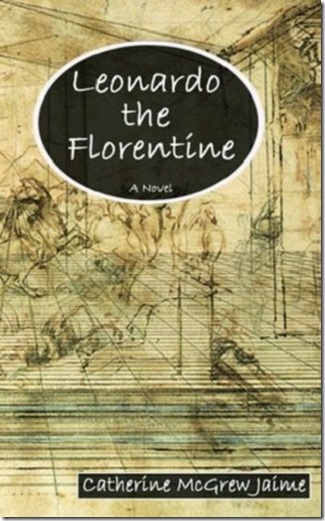
Audiobook Review: Leonardo the Florentine by Catherine McGrew Jaime

leonardo the florentine
Leonardo the Florentine
by Catherine McGrew Jaime
Book 1 in The Life and Travels of Leonardo da Vinci
Unabridged, 2 hr. 55 min.
Catherine Jaime
David Winograd (Narrator)
May 3, 2017
★★★½☆☆
goodreads button

Genre: Historical Fiction; Young Adult

Source: Received audio download via Audible from author for review

Who are the Medici brothers? And who is trying to assassinate them? Why was the Pitti Palace never completed? And what part did Leonardo play in all of this? Leonardo da Vinci is remembered as an artist and inventor. But who was he before anyone knew his name? This family-friendly novel explores the history and the legends of his early years in Florence. It also weaves a mystery of politics and power. This novel is the first in the series of historically based novels

I love that this book introduces a younger audience to the world of Renaissance Italy and a younger Leonardo da Vinci when he was apprenticed to the great Verrocchio. First of all, this is not a da Vinci that many adult novels even explore and novels that explore the life of an apprentice in an art studio are few and far between. Jaime does a fabulous job of creating a breathing world of Florence that feels real. Young Leonardo in his role as an apprentice to Verrocchio is able to be all over Florence and explore so many different areas of the world it is believable that he could experience all these different areas of Renaissance life. The novel touches on politics, humanism, art, architecture, and more in ways that are accessible to a younger audience, but also adults that are not familiar with that time and place. It can certainly be enjoyed by both age audiences. There were times where the novel occasionally felt dense. There was a lot of information that the author offers and it sometimes slowed down the pace of the plot. I do think that this will make a fascinating series for young readers, I just hope that the plot moves a little faster and doesn’t get weighed down by the details.

audiobookimpressions

★★★☆☆

It took a lot of getting used to this narrator to become comfortable with him. He has a sort of strange cadence to his speech. That being said, however, he has a very steady pacing to his narration. For an adult it might feel a touch on the slower side, but as this is aimed at a younger audience, the pacing might be proper so that they can digest all the information presented. I am unsure if this pacing might contribute to my feeling of the text being slightly dense.

You can check out a sample of the audiobook below:

Play symbol 85x85

Reviews of this book by other bloggers:


Buy the Book:
Amazon | Barnes & Noble | RJ Julia

Find Catherine McGrew Jaime: Website | Blog


Copyright © 2017 by The Maiden’s Court

Tuesday, May 10, 2016

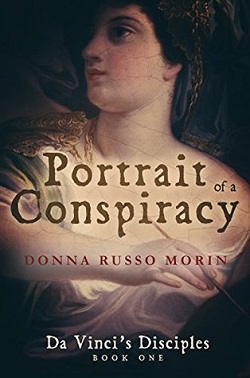
Book Review: Portrait of a Conspiracy by Donna Russo Morin


Portrait of a Conspiracy by Donna Russo Morin
Book 1 in the Da Vinci’s Disciples Trilogy
ARC, Paperback, 290 pages
Diversion Books
May 10, 2016
★★★★☆

Genre: Historical Fiction/Mystery

Source: Received from the publisher for review with Historical Fiction Virtual Book Tours
One murder ignites the powderkeg that threatens to consume the Medici’s Florence. Amidst the chaos, five women and one legendary artist weave together a plot that could bring peace, or get them all killed. Seeking to wrest power from the Medici family in 15th Century Florence, members of the Pazzi family drew their blades in a church and slew Giuliano. But Lorenzo de Medici survives, and seeks revenge on everyone involved, plunging the city into a murderous chaos that takes dozens of lives. Bodies are dragged through the streets, and no one is safe.

Five women steal away to a church to ply their craft in secret. Viviana, Fiammetta, Isabetta, Natasia, and Mattea are painters, not allowed to be public with their skill, but freed from the restrictions in their lives by their art. When a sixth member of their group, Lapaccia, goes missing, and is rumored to have stolen a much sought after painting as she vanished, the women must venture out into the dangerous streets to find their friend and see her safe. They will have help from one of the most renowned painters of their era the peaceful and kind Leonardo Da Vinci. It is under his tutelage that they will flourish as artists, and with his access that they will infiltrate some of the highest, most secretive places in Florence, unraveling one conspiracy as they build another in its place. Historical fiction at its finest, Donna Russo Morin begins a series of Da Vinci’s disciples with a novel both vibrant and absorbing, perfect for the readers of Sarah Dunant.
The story that Donna Russo Morin crafts in Portrait of a Conspiracy is a little bit of a mystery, a little bit of a women’s history lesson, and a little bit of a study of art. Immediately from the first pages of the novel you are sucked into the drama of an assassination and as the pages turn more of the plot behind the assassination unfolds. The five core women of this story get caught up in all of the drama not only because it is happening in their great city and it effects everyone to some extent, but also because one of their own is seemingly implicated in the plot in some manner and they are trying to find and protect their friend before the law does. At this time, women were not in power, so they must find her using the methods available to women, which makes things a little bit trickier. At the same time, they must work to keep their small art group a secret, which is a challenge when the people in power are turning over every stone looking for the perpetrators of the assassination. There is quite a lot going on here!

Overall, I feel that the plot of the novel was well thought-out and well-paced. There was never a sense of the objective being lost even though these characters endure some life events that run alongside the main story of the assassination plot and finding their missing friend. It imitated life in that you can never have a sole focus because life gets in the way – and especially when you are trying to coordinate a group of women it can become a challenge as personalities can get in the way!

There was certainly a lot of attention paid to learning about and detailing the creation of art. These women have their own art studio and we are privy to their creation of their works. In their quest they also study and witness other art being created. It is clear that the author spent a lot of time researching methods of painting and it make the novel that much richer in detail.

Morin is an expert at bringing the setting to life, in this case the city of Florence. I have never been to Florence, or even Italy for that matter, but I felt like I was living and breathing it right along with the characters – from the grimy walls a dark alley, to the smells of death and decay in the plaza, to the plush luxury of the upper class homes.

There is a large cast of characters here – at the very least there are 6 women, their husbands/children, Leonardo da Vinci, and several people of power and influence. Although a dramatis personae is included in the front of the novel, I forgot about this and struggled through most of the novel to remember which name belonged to which woman and from what walk of life she was from. Various sections of the book are told from different perspectives and I found it hard to keep track of who was who – so I recommend you keep the character profiles in front of you! Morin well fleshes out her characters and each is a unique character – I just couldn’t keep them all straight.

There was one thing that kept me from rating this novel higher and this was that at times the narrative became a little bit dense, especially in the first half of it. The most glaring example of this was the inclusion of practically every street that the women covered during their treks around the city; it was something that I began to frequently notice and it slowed down my pace. While I think the author wanted to give a detailed description of their paths through the city I think that it became a little too much and would have benefited from a lighter hand at the street name dropping.

I’m looking forward to seeing how the rest of this series plays out. I am curious if there will be another mystery/thriller angle in the next book or if it will be more focused on their quest to bring women’s art to the fore.

Reviews of this book by other bloggers:
 
Buy the Book: Amazon | Barnes & Noble | RJ Julia

 
Also by Donna Russo Morin:


The Secret of the Glass
[My Review]


The King’s Agent
[My Review]


To Serve a King
[My Review]


The Courtier’s Secret

 
Find Donna Russo Morin: Website | Facebook | Twitter

 
Follow the Tour!

On Twitter: #PortraitofaConspiracyBlogTour


Copyright © 2016 by The Maiden’s Court

Thursday, March 31, 2016

Book Review: The Vatican Princess by C.W. Gortner


The Vatican Princess by C.W. Gortner
Hardcover, 400 Pages
Ballantine Books
February 9, 2016
★★★★ ½☆

Genre: Historical Fiction

Source: Received from the publisher for review with HFVBT blog tours
For fans of Philippa Gregory and Alison Weir, a gripping novel that follows the extraordinary life of young Lucrezia Borgia, the legendary Renaissance Pope Alexander’s beautiful daughter. Was she the heartless seductress of legend? Or merely an unsuspecting pawn in a familial web, forced to choose between loyalty and her own survival?

Glamorous and predatory, the Borgias became Italy’s most ruthless and powerful family, electrifying and terrorizing their 15th-century Renaissance world.

To this day, Lucrezia Borgia is known as one of history’s most notorious villainesses, accused of incest and luring men to doom with her arsenal of poison.

International bestselling author C.W. Gortner’s new novel delves beyond the myth to depict Lucrezia in her own voice, from her pampered childhood in the palaces of Rome to her ill-fated, scandalous arranged marriages and complex relationship with her adored father and her rival brothers—brutal Juan and enigmatic Cesare.

This is the dramatic, untold story of a papal princess who came of age in an era of savage intrigue and unparalleled splendor, and whose courage led her to overcome the fate imposed on her by her Borgia blood.
I can never say enough about the novels that C.W. Gortner writes, I have absolutely LOVED each and every one of them I have read so far, and that includes The Vatican Princess. I do not have as much experience with the Borgias as I do with say, the Tudors, but Gortner does such a fabulous job of creating characters that I did not feel like I was missing anything by coming into this book with relatively little knowledge.

Gortner brings the intrigue of the Borgia world to life as seen through the eyes of a young Lucrezia. Throughout the novel she matures through her teen years into her young 20s and grows in her understanding of the intrigue that is Borgia. She starts off naïve, but learns a lot over time. As has become his signature, Gortner presents a more sympathetic Lucrezia; she is certainly not the scheming, poisoning, woman that is frequently portrayed in novels and television. There were times that I was angry with her, sad for her, and loved with her.

I think it was a smart choice to tell the Borgia story through her eyes; you can definitely find sympathy for her and grow with her throughout the story. While some have taken issue with the choice to only showcase less than a decade of Lucrezia’s life, I think it shows the most compelling period of her life. If it had continued through her later life it probably would have suffered from a loss of excitement during the later years. I think that sometimes authors feel compelled to tell the complete story of their focal characters and it was a refreshing choice here.

While Lucrezia is Gortner’s main character, her brother, Cesare, and father, Roderigo (AKA Pope Alexander VI) get their fair share of page time. Cesare is a man that I grew to love and hate – he was passionate and driven and did everything for his family and mission, even when those choices were reprehensible. For Lucrezia, Roderigo is her father regardless that he is the Holy Father and she finds that he is not quite the man she thought he was. Whereas she early on truly sees what Cesare is capable of and chooses how to deal with that, she constantly gives her father benefit of the doubt and is more blind to his faults which creates interesting decision making for her.

The world crafting that Gortner does in this novel is absolutely palpable. There are colors, sounds, textures, and sensations that leap off the page and embed you in Renaissance Rome or wherever else the travels take you.

As always, I highly recommend this novel and would read anything this author releases be it the Renaissance or twentieth century! Give me more!


Reviews of this book by other bloggers:

Buy the Book: Amazon | Barnes & Noble | RJ Julia


Also by CW Gortner:
The Last Queen


The Confessions of Catherine de Medici
My Review


The Queen’s Vow
My Review


Mademoiselle Chanel
My Review


The Tudor Secret (Book 1)
My Review


The Tudor Conspiracy (Book 2)
My Review


The Tudor Vendetta (Book 3)
My Review


Find C.W. Gortner: Blog | Website | Facebook | Twitter |Goodreads | Pinterest | Youtube | Newsletter

Follow the Tour:


The tour might be over, but you can still check out the posts that were hosted during it.

HFVBT Website
On Twitter: #TheVaticanPrincessBlogTour  #HistoricalFiction  #LucreziaBorgia  #Italy


Copyright © 2016 by The Maiden’s Court

Friday, June 5, 2015

Guest Post by Alison McMahan

I have the pleasure of welcoming Alison McMahan to The Maiden's Court today! Please help me give Alison a warm welcome.  Alison McMahan is the author of The Saffron Crocus, a young adult historical mystery novel that I am very excited about.  I love seeing new YA HF!  She stops by today with a guest post about the plague - I would say enjoy, but that might not be the best terminology!  Read on!

Venice and the Black Death in 1630
Guest post by Alison McMahan, Author of

The Saffron Crocus

02_The Saffron Crocus Cover


I recently stumbled on a NYTimes article that said that there is a new epidemic in town: between 2007 and 2011, syphilis increased among seniors by 52%, and it's still going around.

Fortunately for the lusty inhabitants of nursing homes, we now have the medication to cure syphilis. Such was not the case when the pestilence, or Black Plague, came to Italy.

The Venetian Republic, where my story, The Saffron Crocus, is set, was greatly impacted by the plague. But it wasn't alone. Milan and Tuscany were also hit hard by the plague in 1630. City dwellers thought they were escaping the illness by leaving the cities, but all they did was carry the disease with them to Naples, Rome and Genoa. Nearly seventy percent of the population of Northern Italy and Tuscany succumbed to the disease.

Eighty thousand lives were lost in just seventeen months in Venice alone. On the 9th of November, for example, five hundred and ninety-five died. The Doge himself succumbed to the illness that year.

What did those eighty thousand experience? The plague has three stages: flu-like symptoms with high fever; then buboes, painful black welts with vomiting and diarrhea; and finally, respiratory failure. The disease ran its course in two to eight days and was usually fatal. Even today, if a plague patient reaches the third stage, antibiotics might not save them.

I wanted my heroine, Isabella, to have lost her parents at the age of five to the plague, and to be fifteen at the time the story begins, so my story is set in 1643. Isabella lives in a city just beginning to recover from the epidemic. Those who were once married are now widowed. Those who once had parents, like Isabella, are now orphans. Those who were once wealthy now live in the crumbling remains of their wealth. Isabella lives with her elderly aunt, who contracted the plague, but somehow managed to survive it, although she is still very weak. They manage to get by with what remains of the aunt's diminished fortune, but Isabella knows the money is running out. She has to do something, take over as support for her little family.

And that is the main reason I set my story in the immediate aftermath of the plague. Because the aftermath of a disaster of such tremendous proportions scars the survivors for live, but it also creates a new space for them. The systems that worked before have failed, and new social systems have to be constructed. The rules that hampered a wannabee singer like Isabella are slightly loosened. And she is driven to do more than she would have were she still a girl cossetted by her parents and extended family. Now it's up to her. To start fresh. To build a new life. A new world.

03_Alison McMahan Author

Alison McMahan chased footage for her documentaries through jungles in Honduras and Cambodia, favelas in Brazil and racetracks in the U.S. She brings the same sense of adventure to her award-winning books of historical mystery and romantic adventure for teens and adults. Her latest publication is The Saffron Crocus, a historical mystery for young. Murder, Mystery & Music in 17th Century Venice.

The Saffron Crocus Webpage | Author Website | Facebook | Twitter | Goodreads | Pinterest | Google+ | Instagram | Tumbler

The Saffron Crocus

02_The Saffron Crocus Cover

goodreads button

Book Blurb:

Winner of the 2014 Rosemary Award for Best Historical for Young Adults.

Venice, 1643. Isabella, fifteen, longs to sing in Monteverdi’s Choir, but only boys (and castrati) can do that. Her singing teacher, Margherita, introduces her to a new wonder: opera! Then Isabella finds Margherita murdered. Now people keep trying to kill Margherita’s handsome rogue of a son, Rafaele.

Was Margherita killed so someone could steal her saffron business? Or was it a disgruntled lover, as Margherita—unbeknownst to Isabella—was one of Venice’s wealthiest courtesans?

Or will Isabella and Rafaele find the answer deep in Margherita’s past, buried in the Jewish Ghetto?

Isabella has to solve the mystery of the Saffron Crocus before Rafaele hangs for a murder he didn’t commit, though she fears the truth will drive her and the man she loves irrevocably apart.

Read an Excerpt:

"Who knew a singing career would be this much trouble?

“Rafaele!” She flew into the garret. “Piero, it was so wonderful, wait until I tell you!”

The stool next to the bed was knocked over. The tray with the genepy bottle was on the floor, one of the cups broken. The fat candle that had been burning next to Rafaele’s bed had been flung to the other side of the room.. Canvases were strewn all over the floor, some of them slashed, and many of Master Strozzi’s jars of paint elements were broken.

Did Piero and Rafaele have a fight? She quickly suppressed the thought. Who would get into a fight with a man who was already injured?

Something else must have happened.

She walked across the garret. “Piero? Rafaele, are you here?”

Rafaele was not in the bed. The sheets and blankets she had piled on top of him were strewn everywhere. Blood-stained sheets spilled over the edge of the pallet. There was a pile of clothes on the floor.

She walked around to get a closer look.

Not clothes. It was Piero. Face down, one arm stretched out before him, as if in supplication.

A puddle of blood under him.

Dead."


Buy the Book: Black Opal Books | Amazon.com | Amazon UK | Barnes & Noble | Kobo


Follow the Tour!

04_The Saffron Crocus_Blog Tour Banner_FINAL

On Twitter: #TheSaffronCrocusBookBlast   #TheSaffronCrocusBlogTour   #YA   #Historical   #Venice

HFVBT Tour Page


Copyright © 2015 by The Maiden’s Court

Thursday, November 13, 2014

Book Review: Juliet's Nurse by Lois Leveen

julietsnurse

Juliet’s Nurse by Lois Leveen
Unabridged, 10 hr. 44 min.
Simon & Schuster AUdio
Nicola Barber (Narrator)
September 23, 2014
★★★★★

Genre: Historical Fiction

Source: Received the audio download from the publisher for review

“An enthralling new telling of Shakespeare’s Romeo and Juliet—told from the perspective of Juliet’s nurse.

In Verona, a city ravaged by plague and political rivalries, a mother mourning the death of her day-old infant enters the household of the powerful Cappelletti family to become the wet-nurse to their newborn baby. As she serves her beloved Juliet over the next fourteen years, the nurse learns the Cappellettis’ darkest secrets. Those secrets—and the nurse’s deep personal grief—erupt across five momentous days of love and loss that destroy a daughter, and a family.

By turns sensual, tragic, and comic, Juliet’s Nurse gives voice to one of literature’s most memorable and distinctive characters, a woman who was both insider and outsider among Verona’s wealthy ruling class. Exploring the romance and intrigue of interwoven loyalties, rivalries, jealousies, and losses only hinted at in Shakespeare’s play, this is a never-before-heard tale of the deepest love in Verona—the love between a grieving woman and the precious child of her heart.

In the tradition of Sarah Dunant, Philippa Gregory, and Geraldine Brooks, Juliet’s Nurse is a rich prequel that reimagines the world’s most cherished tale of love and loss, suffering and survival.”

There are so many wonderful things to say about this novel, let’s see if I can get my thoughts in some sort of order here!

Juliet’s Nurse is NOT just a retelling of Romeo and Juliet from the perspective of a side character from Shakespeare’s play. It is so much more bold and rich that that description would imply. Juliet’s Nurse follows the titular character throughout her time in service to the Cappelletti from the day Juliet is born through the days following her death. We find out about her husband and children, how she came to end up being Juliet’s nurse, and what she thought about all of those antics that occurred between the two rival families. Anjelica (the nurse does have a real name!) is a hilarious, passionate, and devoted woman who I enjoyed learning more about throughout this novel.

The bulk of this novel takes place in the years preceding the meeting of Romeo and Juliet – and I was actually quite thankful for this. I loved seeing young Juliet and Tybalt and learning about their relationship – the nurse was basically the mother to both of them. Tybalt became one of my favorite characters in this novel which was a surprise. I think part of the reason why I preferred the early years is because Anjelica actually experienced it. Since this novel is being told from her first person perspective this early section (the part Shakespeare doesn’t tell us about) flows better because the author can make the choice to put her where ever she is needed. Whereas when we get to the Romeo period she does see things from the sidelines and we are only treated to little bits and pieces of the action. While it rounds out the story, it wasn’t as intriguing because of the more limited perspective. It speaks to the strength of the author that she can take the part of the novel I expected to be less interesting (the back story) and make it more fascinating than the well-known star-crossed lover’s story.

Leveen made the Italian world come to vivid life – sights, smells, and all! I couldn’t have asked for anything better in this department.

audiobookimpressions

★★★★★

I thought that this was such a well done audio production. The narrator’s voice was perfect for what I envisioned Anjelica to sound like. She was light and bubbly when appropriate, but could reach the depth of sadness as well. Wonderful!

Author Lois Leveen also has written The Secrets of Mary Bowser. You can visit Leveen’s website or blog for additional information about the book. If you would like to preview the story before reading it, why not try out this excerpt of the book?

Reviews of this book by other bloggers:

Here are some choices for purchasing the book: Amazon, B&N, RJ Julia (my fav indie bookstore).


Copyright © 2014 by The Maiden’s Court

Friday, September 19, 2014

Book Review: Bitter Greens by Kate Forsyth

Bitter Greens (249x377)

Bitter Greens by Kate Forsyth
ARC, Kindle, 496 pages
Thomas Dunne Books
September 23, 2014
★★★★☆

goodreads button

Genre: Historical Fiction, Fairytale Retold

Source: Received from publisher for review with HFVBT Tour

“An utterly captivating reinvention of the Rapunzel fairytale weaved together with the scandalous life of one of the tale's first tellers, Charlotte-Rose de la Force.
Charlotte-Rose de la Force has been banished from the court of Versailles by the Sun King, Louis XIV, after a series of scandalous love affairs. She is comforted by an old nun, Sœur Seraphina, who tells her the tale of a young girl who, a hundred years earlier, is sold by her parents for a handful of bitter greens...

Selena is the famous red-haired muse of the artist Tiziano, first painted by him in 1512 and still inspiring him at the time of his death, sixty-four years later. Called La Strega Bella, Selena is at the centre of Renaissance life in Venice, a world of beauty and danger, seduction and betrayal, love and superstition, retaining her youth and beauty by the blood of young red-haired girls.

After Margherita's father steals a handful of parsley, wintercress and rapunzel from the walled garden of the courtesan Selena Leonelli, he is threatened with having both hands cut off unless he and his wife give away their little red-haired girl. And so, when she turns seven, Margherita is locked away in a tower, her hair woven together with the locks of all the girls before her, growing to womanhood under the shadow of La Strega Bella, and dreaming of being rescued...

Three women, three lives, three stories, braided together to create a compelling story of desire, obsession, black magic and the redemptive power of love.”

I remembered hearing about Bitter Greens when it first came out in Australia a year or so ago. I was super excited to read this book when it came out to US release merely for the fact of the retelling of Rapunzel within a real historical setting. I honestly had not read the book blurb so I didn’t realize until I was well into the book, that Charlotte-Rose de La Force was the writer of one of the Rapunzel versions – leave it to me to completely miss the obvious! The pieces did appear to come together though, so even if you had no idea, you would end up getting the idea. In some ways I got what I was expecting of this novel, and in other ways I didn’t.

I consider the story as three threads composing two stories – that of Rapunzel (to include the back story behind the witch) and the story of Charlotte-Rose (the writer). I liked each of these stories separately, but didn’t love them told together – although I did like the idea of intertwining them together to show how the fairytale writer may have arrived at the concept for the story.

I loved Charlotte-Rose’s story – her saga among the court of the Sun King and even her life at the convent (and longtime readers of this blog know that I haven’t historically been a huge fan of novels set in convents). It was compelling and absolutely oozed the French court.

At the same time, I thought Forsyth did a FANTASTIC job retelling Rapunzel in a realistic historical setting (whether her name is Rapunzel, Margherita, Persinette or Petrosinella). The characters were fully fleshed out – especially Rapunzel’s savior/lover who you never quite know much about in the fairytale. I truly felt her desolation and loneliness being shut away in the tower. I acutally even felt bad for La Strega (the witch) upon being given a compelling backstory.

The stretch for me was in the way the revelation of the story of Rapunzel came to Charlotte-Rose. Even though I arrived at the conclusion before the character did (and remember, I didn’t know she was the writer of the tale), it didn’t feel satisfying or natural to me. It was a little too much of a stretch of make the story of Rapunzel fit into her life experiences.

My only other critique was how dense the novel felt while reading it. No matter how long I read, I never seemed to make any forward progress. This almost 500 page novel took me a hell of a lot longer to read than it should have. I learned a lot about the time, experienced a lot of story, but could only read a few pages at a time without feeling overwhelmed and ready to put the book down. While the atmospheric nature was one of the things I loved about this book, I think its extent made it one of the more difficult aspects as well.

Kate Forsyth has written many other novels, including The Wild Girl. You can visit Forsyth’s website or blog for additional information about the book. If you would like to preview the story before reading it, why not try out this excerpt of the book?

You can also watch the book trailer below.

Reviews of this book by other bloggers:

Here are some choices for purchasing the book: Amazon, B&N, RJ Julia (my fav indie bookstore).

Bitter Greens_Blog Tour Banner_FINALv2

You can follow along with the rest of the tour by visiting the HFVBT site or on Twitter with the following hashtag: #BitterGreensBlogTour


Copyright © 2014 by The Maiden’s Court

Tuesday, August 20, 2013

Book Review: The Serpent and the Pearl by Kate Quinn

SerpentPearl_CV.indd

The Serpent and the Pearl by Kate Quinn
Book 1 of A Novel of the Borgia series

Paperback, 432 pages
Berkley Trade
August 6, 2013
★★★★½☆

Genre: Historical fiction

Source: Received from publisher for review

Rome, 1492. The Holy City is drenched with blood and teeming with secrets. A pope lies dying and the throne of God is left vacant, a prize awarded only to the most virtuous--or the most ruthless. The Borgia family begins its legendary rise, chronicled by an innocent girl who finds herself drawn into their dangerous web...

Vivacious Giulia Farnese has floor-length golden hair and the world at her feet: beauty, wealth, and a handsome young husband. But she is stunned to discover that her glittering marriage is a sham, and she is to be given as a concubine to the ruthless, charismatic Cardinal Borgia: Spaniard, sensualist, candidate for Pope--and passionately in love with her.

Two trusted companions will follow her into the Pope's shadowy harem: Leonello, a cynical bodyguard bent on bloody revenge against a mysterious killer, and Carmelina, a fiery cook with a past full of secrets. But as corruption thickens in the Vatican and the enemies begin to circle, Giulia and her friends will need all their wits to survive in the world of the Borgias.

The thing that stands out the most to me when thinking back on my experience with this book is all of the mouthwatering foods that Quinn describes. Even if I just finished dinner, this book made me hungry all over again. I am compelled to look up Renaissance recipes now to try them out.

This was another hit for Kate Quinn – her first step outside the Ancient Romans, but still within the comfort zone of Italy. Her witty style of writing shines through here as I expected; what I didn’t expect was to enjoy the Borgia clan quite so much. When hearing about the Borgia’s we always hear of the poisons, incest allegations, and general debauchery. While we still get a little bit of the debauchery in terms of the Pope’s mistress, the Borgias were relatively real here – and rather mild. I actually liked them!

I was glad that the narrators of this novel were not actually Borgias. The closest we get is Gulia, the Pope’s mistress. We certainly see and hear from Borgia family members, Roderigo, Cesare, Lucrezia and more, but also enjoyed the non-Borgia characters. I loved Leonello, a sort of body-guard for the Borgia ladies. He was so funny and I couldn’t help but picture Peter Dinklage while reading his chapters. Gulia was great – I loved seeing how she dealt with the various hands dealt to her. I started out disliking Roderigo Borgia, but he grew on me as the book wore on.

The book leaves off on a great cliff-hanger and you can’t help but wanting to know what happens next. I have a feeling that the main characters are all going to come out of this a little different than they went into it. I can’t wait for the next book in this duo!

Author Kate Quinn also has written 3 books set in Ancient Rome: Mistress of Rome, Daughters of Rome, and Empress of the Seven Hills. The second book in the Borgia series is expected for release in 2014. You can visit Quinn’s website or blog for additional information about the book. If you would like to preview the story before reading it, why not try out this excerpt of the book?

My reviews of other books by this author:

Reviews of this book by other bloggers:

Here are some choices for purchasing the book: Amazon, B&N, RJ Julia (my fav indie bookstore).


Copyright © 2013 by The Maiden’s Court

Thursday, April 5, 2012

Book Review: The King’s Agent by Donna Russo Morin

the kings agent

The King’s Agent by Donna Russo Morin
ARC, Paperback, 384 pages
Kensington
February 28, 2012
★★★★☆
goodreads button

Genre: Historical fiction

Source: Received from author as part of the Historical Fiction Virtual Book Tours

“To the casual observer, Battista della Palla is an avid art collector, or perhaps a nimble thief. In reality, the cunning Italian is an agent for François, the King of France, for whom he procures the greatest masterpieces of the day by any means necessary. Embroiled in a power struggle with Charles V, the King of Spain, François resolves to rule Europe’s burgeoning cultural world. When he sets his sights on a mysterious sculpture, Battista’s search for the elusive objet d’art leads him to a captivating woman on a mission of her own…

Having spent her life under the controlling eye of her protector, the Marquess of Mantua, Aurelia longs for freedom. And she finds it in Battista. Together, they embark on a journey to find the clues that will lead him to the sculpture—a venture so perilous it might have spilled from the pen of Dante himself. From the smoldering depths of Rome to a castle in the sky, the harrowing quest draws them inextricably together. But Aurelia guards a dark secret that could tear them apart—and chance the course of history…”

What starts out as a seemingly standard historical fiction novel quickly turns into more of an adventure novel in a historical setting. This was a new sort of twist in the HF genre and certainly for Morin’s novels in general – and it was an amazingly fun ride! Our hero and heroine set out on an epic adventure to find a relic of some extraordinary power for the king of France. To ultimately get to this relic they will have to face tests of strength, speed, power, stamina, emotions and many more challenges along the way.

The author points out that two of the inspirations behind this novel are Dante’s The Divine Comedy, which is explicitly known while reading, and the video game series, Zelda. If you are not a video game aficionado you will not recognize any references to the video game, so don’t be concerned that it will cause to you miss out on something or won’t be to your interest. But, for those of us, me included, who are quite familiar with the game series you will notice that the format of the plot very much feels like a video game. There were times while I was reading where I remember thinking, “I remember doing that!” It was quite the multilayered experience and I can certainly understand why this was an inspiration. If you are not familiar with this video game series, I would compare the plot in some ways with The Da Vinci Code in the regard that you are looking for clues that are hidden in plain sight which will lead you to the next item of importance. In regard to The Divine Comedy I do not have much experience, except knowing the general concept of his work, but the novel actually helped me to have a new experience with the work. I have a lifetime goal to eventually read Dante’s work.

There is a requirement at some points where you have to suspend reality in this novel. This is especially true for those of us who read a lot of historical fiction when it tends to follow a set sort of path anchored in historical detail. The novel is certainly historical fiction, as the events that take place are set within the historical events, people, and setting, however there are some elements that sort of defy the historical formula. Again, a good thing, but just a heads up.

Morin chooses to set this novel in various prominent cities in Italy – Florence, Mantua, Rome – however for some reason I expected it to be set in France. I guess with the back cover text referring to King Francois I of France and not specifically stating Italy I got that stuck in my head. That being said, I loved the world created by the author. Everything stood out in vivid detail – and this is especially true of the artworks, which play a prominent role in this novel. If the art was not given a depth of definition I do not think the plot would have come off as well.

Another great outing from Donna Russo Morin – I can’t wait to read more of her work.

If you would like to preview the story before reading it, why not try out this excerpt of the book?

Other reviews of this book by other bloggers:

Buy the Book: Amazon | Barnes & Noble | RJ Julia


Also by Donna Russo Morin:

to serve a king
To Serve a King
[My Review]

the courtiers secret
The Courtier’s Secret

the secret of the glass
The Secret of the Glass
[My Review]

portrait of a conspiracy
Portrait of a Conspiracy

[My Review]

the competition
The Competition

the flames of florence
The Flames of Florence

Coming in 2018


Find Donna Russo Morin: Website | Facebook | Twitter


Follow the Tour!

TheKingsAgentTourButton
You can follow the rest of Donna’s blog tour by visiting the Historical Fiction Virtual Blog Tours website.  You can also follow the tour on Twitter with #KingsAgentVirtualBookTour


Copyright © 2012 by The Maiden’s Court

Wednesday, October 12, 2011

Book Review: His Last Duchess by Gabrielle Kimm

His Last Duchess by Gabrielle Kimm
ARC, Paperback, 416 pages
Sourcebooks Landmark
October 1, 2011
★★★★☆
goodreads button

Genre: Historical Fiction

Source: Received from the publisher for review
“The chilling story of Lucrezia de Medici, duchess to Alfonso d'Este, His Last Duchess paints a portrait of a lonely young girl and her marriage to an inscrutable duke. Lucrezia longs for love, Alfonso desperately needs an heir, and in a true story of lust and dark decadence, the dramatic fireworks the marriage kindles threaten to destroy the duke's entire inheritance–and Lucrezia's future. His Last Duchess gorgeously brings to life the passions and people of sixteenth-century Tuscany and Ferrara.”

The famous Robert Browning poem is getting quite the novel treatment these days – his first duchess, Lucrezia de Medici, and star of the poem, is featured in His Last Duchess by Gabrielle Kimm while his second duchess, Barbara of Austria, is featured in His Second Duchess by Elizabeth Loupas. His Last Duchess by Kimm does a wonderful job of taking what is given in the poem and building an entire world around it. Almost every detail that is given in the poem is integrated in some way. Even if you know the poem quite well you are still surprised at the twists and turns that are made throughout the novel. I loved the ending – you were not really sure what they were going to do next – the writing really kept you on the edge of your seat.

There is a small secondary storyline about a young girl that occasionally runs through the first half of the novel and then ties into the second half and becomes very important. I wish that during the first half it had been given a feel of some importance because I honestly had no idea of the point of this plot and blew it off to some extent. Another storyline that was added into the novel is the addition of the artists who create a fresco for Alfonso as well as the portrait of Lucrezia featured in the poem. I thought that this really helped to connect the actual portrait to the story from the poem. I also subsequently learned a lot about frescoes. Kimm provides vivid descriptions of the world around the characters so that you can see everything, including the artwork, in great detail.

A word of warning – there are many discussions of sex throughout the novel – between Alfonso and his wife as well as with his whore. Sometimes these can be somewhat graphic and very dark. I understand that this was to create the dark and twisted nature of Alfonso so that we can understand the decisions that he makes – however, I wouldn’t recommend this book to a young teen reader. I would say for those 16 and older.

There is an upcoming spin-off novel coming out based on Franchesca – Alfonso’s whore. While she was a well developed character in the novel, I don’t know that I felt enough about her to care to read her own novel

Gabrielle Kimm has a spin-off book coming out soon (releasing in the UK November 24, 2011) – The Courtesan’s Lover.  If you would like to preview the story before reading it, why not try out this excerpt of the book?

Reviews of this book by other bloggers:

Buy the Book: Amazon | Barnes & Noble | RJ Julia


Also  by Gabrielle Kimm

the courtesans lover
The Courtesan’s Lover

the girl with the painted face
The Girl with the Painted Face

playing a dangerous game
Playing a Dangerous Game


Find Gabrielle Kimm: Website | Facebook | Twitter 


Copyright © 2011 by The Maiden’s Court