*UPDATE*

I have updated my review and giveaway policies page (now just titled Policies above). If you are entering a giveaway, please read and abide by the applicable policy.

Attention Authors! If you arrived here looking for information on the Two Sides to Every Story guest post series, see the tab at the top of the page for more info!


Search This Blog

Showing posts with label 16th c. Show all posts

Friday, December 1, 2017

Book Review: Isabella Unashamed by Helen R. Davis and Carolina Casas

02_Isabella Unashamed
Isabella Unashamed: An Alternative History by Helen R. Davis and Carolina Casas
ARC, e-Book, 147 pages
Editorial Caliope
September 7, 2017
★★★½☆☆
goodreads button

Genre: Alternate Historical Fiction

Source: Received for tour with HFVBT

Isabella of Castile is known as Europe's first great queen. Renowned for her marriage to Ferdinand of Aragon and birthing of modern day Spain, Isabella is also known as the queen who launched the Inquisition, completed the Reconquista and expelled the Jews from her nation. Not long after her triumph in 1492, her dynasty came apart and unraveled, and it was whispered by many that the Trastamara line was cursed.

But, What if Isabella had been wiser and not expelled the Jews, some of the very people who ironically helped put her on the throne of Castile? What if Isabella had had more foresight and had her successor be Catalina, who, although the youngest, was the most like her and the wisest of her children? How would the power balance of 15th and 16th century Europe shifted if Catalina had been the powerful queen regnant of Spain and not one of the 'merry wives' of Windsor?

A joint effort, Isabella Unashamed is written by two authors from very different cultural backgrounds who have nonetheless joined together to create a haunting portrait of Spain's most famous queen, as well as a glimpse of what might have been had Isabella been wiser.

I can count on one hand how many alternative fiction novels I have read. I am extremely selective when it comes to this subgenre of historical fiction because I find them to be more believable when small, but important changes occur rather than sweeping historical changes. I was drawn to Isabella Unashamed because of just these reasons. The changes to the historical timeline include Isabella’s choice to not expel the Jews and to not leave the dynasty in the hands of her daughter Juana (la loca), but instead chose Catalina. I feel that the choices here made complete sense to these historical characters. The rationale that is used for the decisions Isabella makes could have absolutely been considerations that she would have contemplated. My favorite change was watching Catalina grow into a future Spanish queen rather than a fated English queen. It wasn’t a huge leap to have to make to get on board with this new, revised timeline. For those reasons, I really appreciated this piece within the genre.

I did have some struggles with this novel. The writing felt dense and heavy. When this is combined with how the majority of the events that occur are sad/complex/or less than positive, it slowed down the narrative and it took me longer to read this novel that the page length would suggest. There were not any lighter notes to lift the narrative. I also feel that there was an expectation that the reader is already familiar with the actual history as it occurred, which I can sort of understand as why would a reader be interested in the alternative if they don’t know what actually occurred. That being said, I am familiar with the actual history and I found myself being lost in the context sometimes.

I did enjoy this novel and I still look at this genre in the same light in which I did before, I think it just needed a little tightening up of the narrative.

Reviews of this book by other bloggers:


Buy the Book:
Amazon


Also by Helen R. Davis:

evita
Evita: My Argentina

cleopatra unconquered
Cleopatra Unconquered

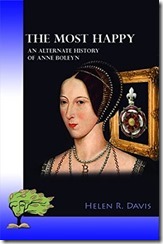
the most happy
The Most Happy

This is Carolina Casas’ debut novel.


Find Helen R. Davis:
Website | Facebook | Twitter

Find Carolina Casas: Blog | Twitter | Goodreads


Giveaway!

As part of the blog tour there is a tour-wide giveaway of an eBook of Isabella Unashamed! To enter, please enter via the Gleam form below.  If you have questions, please contact the tour coordinator.  Good luck!

Giveaway Rules

  • Giveaway ends at 11:59pm EST on December 7th. You must be 18 or older to enter.
  • Giveaway is open INTERNATIONALLY.
  • Only one entry per household.
  • All giveaway entrants agree to be honest and not cheat the systems; any suspect of fraud is decided upon by blog/site owner and the sponsor, and entrants may be disqualified at our discretion.
  • Winner has 48 hours to claim prize or new winner is chosen.

Isabella Unashamed


Follow the Tour!

Release Graphic

On the HFVBT website or on Twitter: #IsabellaUnashamedBlogTour

Monday, November 27
Kick Off at Passages to the Past

Tuesday, November 28
Feature at Myths, Legends, Books & Coffee Pots

Wednesday, November 29
Review at A Chick Who Reads
Feature at Just One More Chapter

Thursday, November 30
Excerpt at What Is That Book About

Friday, December 1
Review at The Maiden’s Court
Interview at Author Dianne Ascroft’s Blog

Saturday, December 2
Feature at WS Momma Readers Nook

Monday, December 4
Review at Locks, Hooks and Books

Tuesday, December 5
Review at So Many Books, So Little Time
Feature at The Hungry Bookworm

Wednesday, December 6
Feature at Mello & June, It’s a Book Thang!

Thursday, December 7
Review at History From a Woman’s Perspective


Copyright © 2017 by The Maiden’s Court

Tuesday, May 10, 2016

Two Sides to Every Story: The Wicked Lady is Innocent & Giveaway


Today I have the wonderful opportunity to welcome Deborah Swift, author of the upcoming Lady of the Highway, book 3 of her Highway Series, to The Maiden's Court with an awesome contribution to the Two Sides to Every Story series.  Swift treats us to the story behind the highwaywoman legend of Katherine Fanshawe.  I hope you will enjoy it!

The Wicked Lady is Innocent

The Legend of The Wicked Lady, Lady Katherine Fanshawe vs. The Real Life of Lady Katherine Fanshawe.
The wind was a torrent of darkness among the gusty trees.The moon was a ghostly galleon tossed upon cloudy seas…’

Alfred Noyes, The Highwayman
As far as I know, there has only ever been one female highwayman, and she was known as The Wicked Lady.  She has long been a legend in Hertfordshire, England, but was made a sensation by the 1945 film The Wicked Lady. The film starred Margaret Lockwood in the title role as a nobleman's wife who secretly becomes a highwayman to relieve her life of boredom. The mystery of why she would take such an extreme action was the talk of its day –and the film had one of the biggest audiences ever for a film of its period, $18.4 million – a staggering number. I can remember my mother talking about it as one of her favorite films.

The Wicked Lady - 1945
It was such a hit that the film was re-made in 1983 and starred Faye Dunaway in the lead role, but that version was a disaster and earned Faye Dunaway an award for the Worst Actress. The film itself was based on a book by Magdalen King Hall, The Life and Death of the Wicked Lady Skelton, but the novel was only loosely based on the real Katherine’s life. I have a copy and it is exciting reading, though rather long-winded in the telling by today’s standards.

The Popular Legend of the Wicked Lady

A beautiful lady of the manor, Lady Katherine Fanshawe, is bored with her humdrum life, and begins riding out secretly, dressed in men’s attire, as a highwaywoman. Her husband, meanwhile, is completely unaware of her perilous night-time exploits, because she creeps out from Markyate Cell (the Manor house) through a secret passageway. Katherine eventually meets another dashing gentleman of the road, a handsome farmer called Ralph Chaplin, and falls in love, but their affair must remain hidden. The pair perform a series of ‘Bonnie and Clyde’ type robberies, until eventually Ralph is caught during a failed hold-up, and subsequently hanged on Finchley Common. Mad with grief at his death, the ‘wicked lady’ terrorizes the villagers in the area, burning down houses, and shooting the local constable on his doorstep.

The ‘wicked’ Lady Katherine is eventually caught when a trap is set for her, and a wagon that she holds up on the highway contains a group of armed men. She is shot, and fatally wounded. She rides back to Markyate Cell, but dies of her injuries before reaching the front door.

Many ghostly sightings have added to the legend. Her ghost has been seen riding her horse at full gallop on dark nights, and in 1840 when part of the manor was destroyed by fire, the blaze was blamed on Lady Katherine.  Whilst helping to put out the fire several locals said that they felt an eerie presence and feared they were being spied on by her unquiet ghost.

Lady Katherine Fanshawe is Innocent – The Research

Despite the romance of the legend, there is actually nothing of substance to link the real Lady Katherine Fanshawe with any sort of highway robbery, although it is likely that there was robbery and plunder on the roads at this period because it was a period of civil unrest. Many Royalists had been uprooted from their estates by the English Civil Wars, and in order to survive, took to the road and committed crimes that could have been attributed to her. The events of the English Civil War caused confusion and massive social unrest, and formed a plausible background for disenfranchised aristocrats.

Lady Katherine Fanshawe
Investigation of Anne Fanshawe’s diary, written at the time, has little of note to say on Katherine, her relation by marriage, and certainly nothing pertaining to robbery on the highway.

And nowhere in the real historical records is Katherine’s lover, Ralph Chaplin, traceable, although he always features in the retelling of the legend as the person who persuaded her to robbery in the first place.

Markyate Cell certainly existed though. It was called a ‘cell’ because the original site was a hermitage, which housed the nun Christina of Markyate, and eventually became a priory. The priory did not fare well during the Dissolution and was demolished in 1537, and the much more elaborate Markyate Manor was built on its footprint, although it is still sometimes known as Markyate Cell - the cell being the original hermitage. George Ferrers retained the name ‘Cell’ when he bought the land in 1548. The Ferrers family controlled this land when Markyate Manor was supposedly the home of Katherine Ferrers, the Wicked Lady.

Markyate Manor - Photo Credit
Born 4th May 1634, Katherine was the daughter of Knighton Ferrers of Bayfordbury, and his wife Katherine Walter. After the death of her husband, George Ferrers, Katherine’s mother re-married Sir Simon Fanshawe, a neighboring landowner. When her mother died, Markyate Manor was soon in the iron control of Katherine’s step-father. Worse, at only twelve years old, Katherine was forced into an arranged marriage with his nephew, Thomas Fanshawe, so that The Fanshawes could retain control of the estate, thus Katherine Ferrers became Katherine Fanshawe.

However – although the house belonged to her husband, it has never been proved that Katherine Fanshawe actually lived at Markyate Manor during the time she was supposed to have been a highwaywoman, and evidence shows the manor was sold well before her death. After Cromwell came to power, Markyate Manor was sold by her husband to ‘three Londoners’ in 1655.

Nomansland Common, where she was thought to hold up the highway, is a long way from Markyate Manor – half a day’s ride, surely impractical for hit and run robberies?

Records show that Katherine Fanshawe died aged 26, and was not recorded as having any children, which was highly unusual for a married woman her age in those times, although can be explained by the war. Her husband and stepfather actually spent much of the war exiled in France or Ireland.

Katherine was buried not in the Fanshawe family vault, as might be expected, but at St Mary’s Church, Ware, so perhaps the real Lady Katherine Fanshawe was residing close to there when she died. So with Katherine’s probably undramatic death, the Ferrers line died out.

John Barber, on his excellent website on Lady Katherine, poses the idea that her life may have been confused with the story of ‘Maude of Allinghame’ (1833), a Victorian ballad that tells the story of a noblewoman who robs the Mayor of Redbourne. She too has an illicit affair, and she too dies on the steps of her manor house, Allingham Hall. Coincidentally Katherine’s mother was related to a family called Allinghame.

This seems to be the most likely explanation, although parts of Katherine’s legend are undoubtedly true. She was forced to marry tragically early; her stepfather did squander her fortune; the real Markyate Manor does have a secret passage, because in the 1820’s builders discovered a secret passageway at Markyate Manor.  It ran from the kitchen to a chamber above, and was most likely a priest hole – as both the Ferrers and the Fanshawes were closet Catholics.  Also possible as a source of the legend is Wicked Lord Ferrers, who was hanged at Tyburn in 1760 for the murder of his servant. His name and his story could easily have been grafted on to Katherine’s history.

So, was Katherine a wicked lady? Probably not. But the legend is still irresistible, and my three books for young adults have made full use of the known history, along with selected elements of the legend.

 
Deborah Swift is the author of three previous historical novels for adults, The Lady’s Slipper, The Gilded Lily, and A Divided Inheritance, all published by Macmillan/St Martin’s Press, as well as the Highway Trilogy for teens (and anyone young at heart!) Shadow on the Highway and Spirit of the Highway are available now.  The third novel in the Highway Trilogy, Lady of the Highway is out soon. Her first novel was shortlisted for the Impress prize for new novelists.

She lives on the edge of the beautiful and literary English Lake District – a place made famous by the poets Wordsworth and Coleridge. 

You can find Deborah on the following social media sites: WEBSITE | BLOG | FACEBOOK | TWITTER | GOODREADS | GOOGLE+ |PINTEREST


Buy the Books: Amazon | Barnes & Noble | RJ Julia


Book Blurb:

England 1652
Seventeen-year-old Lady Katherine Fanshawe (Kate) has lost everything in the civil war that has torn England apart. Determined to build a community of friends, she invites Owen Whistler and the radical Diggers sect to make their home in her manor house.

When her stepfather unexpectedly returns, he evicts the Diggers with no pay, despite their months of labour on his land. Wilful, and determined to regain Owen’s trust, Kate has to repay her friends the only way she can – by turning to secret highway robbery.

But Kate is not the only one riding the highway at night, and her rival for the road is intent on bloodshed and murder. When he unleashes a reign of terror, Kate gets the blame. Will she be able to clear her name, and save the one person she loves from his lust for revenge?


Giveaway!!

I have an excellent giveaway that is open internationally. It is for a signed Paperback Copy of Shadow on the Highway and an Ebook Copy of Spirit on the Highway, both books so far published in Swift's Highway series. Entries thru Rafflecopter below. Open thru May 31st!

a Rafflecopter giveaway


Copyright © 2016 by The Maiden’s Court

Tuesday, April 19, 2016

Two Sides to Every Story: The Thirty Years War: Result of Religious Strife or Excessive Greed


Today I have the opportunity to present the newest Two Sides to Every Story entry in the series and it is with a guest post by author Laura Libricz.  This topic, The Thirty Years War, is interesting to me as I just covered this subject matter in my recent semester of class.  Check it out!

The Thirty Years War: Result of Religious Strife or Excessive Greed

Christianity is a religion based on the teachings of Jesus Christ and has over two billion followers, about one-third of the world’s population. Since the dawn of Christianity some 2000 years ago, major divisions have been founded, the largest of which are the Western and Eastern Christian groups. The subdivisions within these two families are numerous and diverse. Today the largest of these subdivisions include the Roman Catholic Church, the Protestant Church, the Eastern Orthodox, Anglican, Oriental Orthodox Churches and the Assyrian Church of the East. These divisions have been everything but simple. In Central Europe, the division of  Roman Catholicism into its Protestant factions in the 15th and 16th century was one of the largest contributing factors in Europe’s bloodiest and most devastating war, the Thirty Years War.

Roman Catholicism had deep-rooted ties to the Holy Roman Empire. The Empire was the political ruling body in central Europe from the 8th century until 1806. It began when the Duke of the Franks and the grandfather of Charlemagne, Charles Martel, united the Frankish and Germanic tribes to fight the Muslims that had invaded from Spain. The conversion of the tribes of pagan folk to Christianity followed. After that, the Holy Roman Empire functioned as the non-religious counterpart to the Catholic Church and was a symbol of the unity of Western Christianity. 
Holy Roman Empire
Image Credit:Jaspe from ru [GFDL (http://www.gnu.org/copyleft/fdl.html) or CC-BY-SA-3.0 (http://creativecommons.org/licenses/by-sa/3.0/)], via Wikimedia Commons 

By the end of the Middle Ages, the Catholic Church had grown swollen, rich, and powerful and was sinking into debauchery. And they had ways of raising revenues to support their excesses. Relationships between the people and the church were often based on money. Positions in the church could be bought. Salvation could also be bought in the form of indulgences. The church sold relics and earned money from those on pilgrimages.

Reformers had been known to protest the excesses of the Roman Catholic Church, their worldly rule and abuse of power and money. In the early 1400’s, the preacher Jan Hus from Prague spoke out openly against the church and its decadence. Bohemian aristocracy supported Hus, even after he was excommunicated. Although he had their support, he was executed, burned at the stake, by the German king Sigismund, in 1415. 

One hundred years later, Martin Luther set out to reform the Catholic Church as well. He was not intending to create a new one. The famed story reads that he nailed a document called the 95 Theses to the door of a church in Wittenberg in 1517. The main points of the Theses disputed and condemned the practice of the church selling indulgences to people in order to insure their souls’ entrance to heaven. This famous incident is credited to be the birth of Protestantism. 

What made Martin Luther’s cause different from the other protests, giving him so much attention and splitting the Roman Catholic religion in Germany and the Holy Roman Empire into two? 

One contributing factor was the availability of printed material. Martin Luther’s teachings were able to spread quickly. Students would listen to his teachings during his lectures or his ‘Tischreden,’ and take notes. Later these lectures were printed into flyers and books for the masses to read. And during his exile he translated the New Testament into German so that the people didn’t need the clergy to interpret scripture. It was published in 1522 and the Old Testament followed in 1534, though some may differ with his interpretation of scripture. The Catholic Church differed with his interpretation and his intention, believing that only clergy could deliver the scripture to the masses to avoid misunderstanding.

Some historians believe that Germany would have wholly converted to a religion based on Protestant teachings, as did Sweden and Denmark, had not the Imperial forces of the Holy Roman Empire and the Catholic Church intervened. But the Church saw themselves as the image of Christendom and the Empire saw itself as the continuation of ancient Rome. The Roman church was the only one competent enough to interpret the word of God. Lutheran teachings claimed that the word of God should not be left to the interpretation of wayward clergy. The two sides of this story were the main conflicts that fueled the war known up until World War I as The Great War in Germany—the Thirty Years War.


Laura Libricz was born and raised in Bethlehem PA and moved to Upstate New York when she was 22. After working a few years building Steinberger guitars, she received a scholarship to go to college. She tried to ‘do the right thing’ and study something useful, but spent all her time reading German literature.

She earned a BA in German at The College of New Paltz, NY in 1991 and moved to Germany, where she resides today. When she isn’t writing she can be found sifting through city archives, picking through castle ruins or aiding the steady flood of Höfner musical instruments into the world market.

Her first novel, The Master and the Maid, is the first book of the Heaven's Pond Trilogy. The Soldier’s Return and Ash and Rubble are the second and third books in the series.  You can find Laura on her website or blog and on social media at Facebook and Twitter.

Book Blurb:

The Master and the Maid (Available Soon!)
Book One of the Heaven's Pond Trilogy
She’s lost her work, her home and her freedom. Now, harboring a mysterious newborn, she could lose her life.

In 17th Century Germany on the brink of the Thirty Years War, 24-year-old Katarina is traded to the patrician Sebald Tucher by her fiancé Willi Prutt in order to pay his debts. En route to her forced relocation to the Tucher country estate, Katarina is met by a crazed archer, Hans-Wolfgang, carrying a baby under his cloak. He tells her an incredible story of how his beloved was executed by a Jesuit priest for witchcraft right after the birth and makes Katarina—at sword point—swear on her life to protect the child. But protecting the child puts Katarina at risk. She could fall in disfavor with her master. She could be hunted by the zealots who killed his beloved. She could be executed for witchcraft herself. Can Katarina's love for the baby and Sebald Tucher's desire for her keep the wrath of the zealots at bay?

Set in Franconia, The Master and the Maid is an accurate, authentic account of a young woman's life in Germany in the 1600's, her struggle for freedom and her fight for those she loves.


Copyright © 2016 by The Maiden’s Court

Thursday, March 31, 2016

Book Review: The Vatican Princess by C.W. Gortner


The Vatican Princess by C.W. Gortner
Hardcover, 400 Pages
Ballantine Books
February 9, 2016
★★★★ ½☆

Genre: Historical Fiction

Source: Received from the publisher for review with HFVBT blog tours
For fans of Philippa Gregory and Alison Weir, a gripping novel that follows the extraordinary life of young Lucrezia Borgia, the legendary Renaissance Pope Alexander’s beautiful daughter. Was she the heartless seductress of legend? Or merely an unsuspecting pawn in a familial web, forced to choose between loyalty and her own survival?

Glamorous and predatory, the Borgias became Italy’s most ruthless and powerful family, electrifying and terrorizing their 15th-century Renaissance world.

To this day, Lucrezia Borgia is known as one of history’s most notorious villainesses, accused of incest and luring men to doom with her arsenal of poison.

International bestselling author C.W. Gortner’s new novel delves beyond the myth to depict Lucrezia in her own voice, from her pampered childhood in the palaces of Rome to her ill-fated, scandalous arranged marriages and complex relationship with her adored father and her rival brothers—brutal Juan and enigmatic Cesare.

This is the dramatic, untold story of a papal princess who came of age in an era of savage intrigue and unparalleled splendor, and whose courage led her to overcome the fate imposed on her by her Borgia blood.
I can never say enough about the novels that C.W. Gortner writes, I have absolutely LOVED each and every one of them I have read so far, and that includes The Vatican Princess. I do not have as much experience with the Borgias as I do with say, the Tudors, but Gortner does such a fabulous job of creating characters that I did not feel like I was missing anything by coming into this book with relatively little knowledge.

Gortner brings the intrigue of the Borgia world to life as seen through the eyes of a young Lucrezia. Throughout the novel she matures through her teen years into her young 20s and grows in her understanding of the intrigue that is Borgia. She starts off naïve, but learns a lot over time. As has become his signature, Gortner presents a more sympathetic Lucrezia; she is certainly not the scheming, poisoning, woman that is frequently portrayed in novels and television. There were times that I was angry with her, sad for her, and loved with her.

I think it was a smart choice to tell the Borgia story through her eyes; you can definitely find sympathy for her and grow with her throughout the story. While some have taken issue with the choice to only showcase less than a decade of Lucrezia’s life, I think it shows the most compelling period of her life. If it had continued through her later life it probably would have suffered from a loss of excitement during the later years. I think that sometimes authors feel compelled to tell the complete story of their focal characters and it was a refreshing choice here.

While Lucrezia is Gortner’s main character, her brother, Cesare, and father, Roderigo (AKA Pope Alexander VI) get their fair share of page time. Cesare is a man that I grew to love and hate – he was passionate and driven and did everything for his family and mission, even when those choices were reprehensible. For Lucrezia, Roderigo is her father regardless that he is the Holy Father and she finds that he is not quite the man she thought he was. Whereas she early on truly sees what Cesare is capable of and chooses how to deal with that, she constantly gives her father benefit of the doubt and is more blind to his faults which creates interesting decision making for her.

The world crafting that Gortner does in this novel is absolutely palpable. There are colors, sounds, textures, and sensations that leap off the page and embed you in Renaissance Rome or wherever else the travels take you.

As always, I highly recommend this novel and would read anything this author releases be it the Renaissance or twentieth century! Give me more!


Reviews of this book by other bloggers:

Buy the Book: Amazon | Barnes & Noble | RJ Julia


Also by CW Gortner:
The Last Queen


The Confessions of Catherine de Medici
My Review


The Queen’s Vow
My Review


Mademoiselle Chanel
My Review


The Tudor Secret (Book 1)
My Review


The Tudor Conspiracy (Book 2)
My Review


The Tudor Vendetta (Book 3)
My Review


Find C.W. Gortner: Blog | Website | Facebook | Twitter |Goodreads | Pinterest | Youtube | Newsletter

Follow the Tour:


The tour might be over, but you can still check out the posts that were hosted during it.

HFVBT Website
On Twitter: #TheVaticanPrincessBlogTour  #HistoricalFiction  #LucreziaBorgia  #Italy


Copyright © 2016 by The Maiden’s Court

Friday, February 19, 2016

Book Review: Isabel the Queen by Peggy K. Liss


Isabel the Queen: Life and Times by Peggy K. Liss
e-Book, 496 pages
University of Pennsylvania Press
December 1, 2004
★★★★☆

Genre: Non-Fiction, Biography

Source: Personal purchase for my Masters class
Queen Isabel of Castile is perhaps best known for her patronage of Christopher Columbus and for the religious zeal that led to the Spanish Inquisition, the waging of holy war, and the expulsion of Jews and Muslims across the Iberian peninsula. In this sweeping biography, newly revised and annotated to coincide with the five-hundredth anniversary of Isabel's death, Peggy K. Liss draws upon a rich array of sources to untangle the facts, legends, and fiercely held opinions about this influential queen and her decisive role in the tumultuous politics of early modern Spain.

"Isabel the Queen" reveals a monarch who was a woman of ruthless determination and strong religious beliefs, a devoted wife and mother, and a formidable leader. As Liss shows, Isabel's piety and political ambition motivated her throughout her life, from her earliest struggles to claim her crown to her secret marriage to King Fernando of Aragon, a union that brought success in civil war, consolidated Christian hegemony over the Iberian peninsula, and set the stage for Spain to become a world empire."
My knowledge of Isabel, Queen of Castile, has been limited to what you learn about her involvement in the “discovery” of the Americas and the Inquisition and the fictional interpretation of her life in The Queen’s Vow by C.W. Gortner. I endeavored to read this book as an assignment from class and selected it from the class syllabus, but I was very pleased to find out that this book was referenced as one of Gortner’s sources in his novel.

Isabel the Queen brings the reader into the world of Isabel by introducing the rule and times of her father, Juan, and half-brother, Enrique. The author includes this information as a means of establishing what Isabel had as her professional examples and to show the differences when Isabel became the Queen. I think that this worked well, but I did get a little tired reading statements like, “and it proved a costly mistake whose lessons would not be lost on Isabel” (Kindle loc. 757). The author makes it VERY clear with these kinds of statements to draw the divisions between Isabel and her brother especially.

This book was chock full of information on not just Isabel as a person, but also the world of Spain and Europe around her. It was very dense and not a book that you finish in a short period of time, believe me, it will take you awhile to read it all; this is certainly more of a research book than a fun reading book. However, you will come away from it with a new knowledge and appreciation of the time.

Any discussion of Isabel inevitably wades in the water of controversy with the portrayal of the Columbus expedition as well as the handling of the Spanish Inquisition and persecution of the Jews and Muslims. Liss doesn’t shy away from these controversial subject and does lay out the information, both positive and negative, but she doesn’t take a firm stance in either direction. As the book was originally published around the 500th anniversary of Columbus’ expedition and then was republished around the 500th anniversary of the death of Isabel it makes sense that she treads carefully around these subjects in order to take advantage of these dates.

I came away from this book with a much more concrete sense of who Isabel was as a person and as a Queen. I would recommend this book, but just know it might be a little denser than you are looking for.

Reviews of this book by other bloggers:

Buy the Book: Amazon | Barnes & Noble | RJ Julia


**Read an Excerpt**

Also by Peggy Liss:
Atlantic Empires


Copyright © 2016 by The Maiden’s Court

Wednesday, January 7, 2015

Book Review: The King's Curse by Philippa Gregory

the king's curse

The King’s Curse by Philippa Gregory
Book 6 in The Cousin’s War Series
Unabridged, 24 hr. 11 min.
Simon & Schuster Audio
Bianca Amato (Narrator)
September 9, 2014
★★★★☆

Genre: Historical Fiction

Source: Received the download from the publisher for review

“Regarded as yet another threat to the volatile King Henry VII's claim to the throne, Margaret Pole, cousin to Elizabeth of York (known as the White Princess) and daughter of George, Duke of Clarence, is married off to a steady and kind Lancaster supporter - Sir Richard Pole. For his loyalty, Sir Richard is entrusted with the governorship of Wales, but Margaret's contented daily life is changed forever with the arrival of Arthur, the young Prince of Wales, and his beautiful bride, Katherine of Aragon. Margaret soon becomes a trusted advisor and friend to the honeymooning couple, hiding her own royal connections in service to the Tudors.

After the sudden death of Prince Arthur, Katherine leaves for London a widow, and fulfills her deathbed promise to her husband by marrying his brother, Henry VIII. Margaret's world is turned upside down by the surprising summons to court, where she becomes the chief lady-in-waiting to Queen Katherine. But this charmed life of the wealthiest and "holiest" woman in England lasts only until the rise of Anne Boleyn, and the dramatic deterioration of the Tudor court. Margaret has to choose whether her allegiance is to the increasingly tyrannical king, or to her beloved queen; to the religion she loves or the theology which serves the new masters. Caught between the old world and the new, Margaret Pole has to find her own way as she carries the knowledge of an old curse on all the Tudors.”

This is actually the first book in The Cousin’s War series that I have read, although I do own the majority of them. I can tell you that you do not need to have read the other books in this series to enjoy this book, it reads as a stand-alone book with references to people who are featured in the other entries in this series.

I have read many other Gregory novels in the past and the style here is no different than that of her Tudor series. In this installment we are treated to Margaret Pole and the issues facing her family at the hands of Henry VII and ultimately Henry VIII. Some of the events that unfold in this book will feel a little repetitive if you have read The Constant Princess, also by Philippa Gregory. Margaret Pole is young Katherine of Aragon’s lady and she is embroiled in the whole “did they or didn’t they” scandal that surrounds Katherine and Prince Arthur’s marriage, but this time seen from a slightly different view.

I ultimately liked the Pole family featured in this novel – I found them to be likable and their story interesting and engaging (Gregory is fairly sympathetic to the York family). There always seems to be one bad egg in every family, and the Pole family has one of those too. I felt bad for all of the things that this family had to go through at the hands of the King of England. It had to be quite an unsettling time to live through, full of uncertainty. As the book is being told in the first person the end is very interesting, and I think very well done, for how Margaret’s story ends.

Overall this was a good read with just a few small places where the story slowed down.

Oh, and the curse? We are beat over the head with what that is all about. Subtlety is not her strong point.

audiobookimpressions

★★★★ ½☆

Bianca Amato is a prolific historical fiction narrator. She narrates all of The Cousin’s War series and a few of the Tudor novels, as well as other books by Tasha Alexander, Celia Rees, Karen Essex and others. She has won Audiofile awards for her narrations of Gregory’s novels. And all of these awards are deserved because the narration of this book was a hit. Amato’s narration helped to gloss over some of those areas when the writing was spotty.

Author Philippa Gregory also has written the following books in The Cousin’s War series: The White Queen, The Red Queen, The Kingmaker’s Daughter, The Lady of the Rivers, and The White Princess. You can visit Gregory’s website for additional information about the book.

My reviews of other books by this author:

Reviews of this book by other bloggers:

Here are some choices for purchasing the book: Amazon, B&N, RJ Julia (my fav indie bookstore).


Copyright © 2015 by The Maiden’s Court

Monday, October 20, 2014

Book Review: The Tudor Vendetta by C.W. Gortner

TheTudorVendetta

The Tudor Vendetta by C.W. Gortner
Book 3 in the Elizabeth I Spymaster Chronicles
ARC, E-book, 304 pages
St. Martin’s Griffin
October 21, 2014
★★★★ ½☆

goodreads button

Genre: Historical Fiction - Thriller

Source: Received for review from publisher as part of HFVBT tour

“Winter, 1558: Elizabeth I has ascended the throne but the first days of her reign are already fraught with turmoil, the kingdom weakened by strife and her ability to rule uncertain.

Summoned from exile abroad at the new queen's behest, Brendan Prescott arrives in London to face his shattered past. He soon finds himself pitted in deadly rivalry with his life-long foe, Robert Dudley, but when a poison attempt overshadows the queen’s coronation, Elizabeth privately dispatches Brendan on a far more dangerous assignation: to find her favored lady-in-waiting, Lady Parry, who has vanished in Yorkshire.

Upon his arrival at the crumbling sea-side manor that may hold the key to Lady Parry's disappearance, he encounters a strange, impoverished family beset by grief, as well as mounting evidence that they hide a secret from him. The mystery surrounding Lady Parry deepens as Brendan begins to realize there is far more going on at the manor than meets the eye, but the closer he gets to the heart of the mystery, the more he becomes the quarry of an elusive stranger with a vendetta— one that could expose both his own buried identity and a long-hidden revelation that will bring about Elizabeth's doom.

From the intrigue-laden passages of Whitehall to a foreboding Catholic manor and the prisons of the Tower, Brendan must risk everything to unravel a vendetta that strikes at the very core of his world, including his loyalty to his queen.”

The first two books in the Elizabeth I Spymaster series I ate right up – amazing as they were. I took The Tudor Vendetta with me on my recent vacation and finished the whole thing on the flight! Yes, it is that good (the flight wasn’t that long)! While the third book might wrap up the trilogy (please write some more stories for Brendan!) it blazes ahead at the same speed as its predecessors to a satisfying conclusion.

As is the case with Gortner’s novels, the characters are so lifelike and real you can envision yourself in their shoes or encountering them in some dark alleyway. They pull at your heartstrings or make you incredibly angry with their actions. As Brendan is employed by Cecil, he is always right in the thick of some intrigue, danger, or otherwise shady circumstance. Brendan is a true HF hunk.

As has been the case with the drama Brendan has been tied up with in the past, what he faces here is not a plot twist that I saw coming. Gortner does a great job of grounding the plot in historical reality, but also playing with some of the rumors and scandals from the Tudor era to add some depth to the intrigue. Certainly plausible, definitely entertaining.

I’m saddened that we have reached the end of the Spymaster trilogy, but the novel closed with what isn’t a definitive ending, so I hope someday to be treated to more of the thrill that this series is.

Author C.W. Gortner also has written The Tudor Secret (book 1) and The Tudor Conspiracy (book 2) among other novels. You can visit Gortner’s website or blog for additional information about the book. If you would like to preview the story before reading it, why not try out this excerpt of the book?

My reviews of other books by this author:

Reviews of this book by other bloggers:

Here are some choices for purchasing the book: Amazon, B&N, RJ Julia (my fav indie bookstore).

tudor vendetta tour

You can follow along with the rest of the tour by visiting the HFVBT site or on Twitter with the following hashtag: #TudorVendettaBlogTour.

There is also a tour wide giveaway (it is being hosted on all the blogs on the tour and the winner will be selected by the tour coordinator).   It's a pretty epic giveaway too, for a complete set of the Spymaster Trilogy!! Get your entries in!  Here are the rules:

  • Open to residents of the USA
  • Giveaway ends at 11:59pm on November 28th. You must be 18 or older to enter.
  • Winner will be chosen via Rafflecopter on November 29th and notified via email.
  • Winner have 48 hours to claim prize or new winner is chosen
  • Entries are made through the Rafflecopter widget below.

a Rafflecopter giveaway


Copyright © 2014 by The Maiden’s Court

Friday, September 19, 2014

Book Review: Bitter Greens by Kate Forsyth

Bitter Greens (249x377)

Bitter Greens by Kate Forsyth
ARC, Kindle, 496 pages
Thomas Dunne Books
September 23, 2014
★★★★☆

goodreads button

Genre: Historical Fiction, Fairytale Retold

Source: Received from publisher for review with HFVBT Tour

“An utterly captivating reinvention of the Rapunzel fairytale weaved together with the scandalous life of one of the tale's first tellers, Charlotte-Rose de la Force.
Charlotte-Rose de la Force has been banished from the court of Versailles by the Sun King, Louis XIV, after a series of scandalous love affairs. She is comforted by an old nun, Sœur Seraphina, who tells her the tale of a young girl who, a hundred years earlier, is sold by her parents for a handful of bitter greens...

Selena is the famous red-haired muse of the artist Tiziano, first painted by him in 1512 and still inspiring him at the time of his death, sixty-four years later. Called La Strega Bella, Selena is at the centre of Renaissance life in Venice, a world of beauty and danger, seduction and betrayal, love and superstition, retaining her youth and beauty by the blood of young red-haired girls.

After Margherita's father steals a handful of parsley, wintercress and rapunzel from the walled garden of the courtesan Selena Leonelli, he is threatened with having both hands cut off unless he and his wife give away their little red-haired girl. And so, when she turns seven, Margherita is locked away in a tower, her hair woven together with the locks of all the girls before her, growing to womanhood under the shadow of La Strega Bella, and dreaming of being rescued...

Three women, three lives, three stories, braided together to create a compelling story of desire, obsession, black magic and the redemptive power of love.”

I remembered hearing about Bitter Greens when it first came out in Australia a year or so ago. I was super excited to read this book when it came out to US release merely for the fact of the retelling of Rapunzel within a real historical setting. I honestly had not read the book blurb so I didn’t realize until I was well into the book, that Charlotte-Rose de La Force was the writer of one of the Rapunzel versions – leave it to me to completely miss the obvious! The pieces did appear to come together though, so even if you had no idea, you would end up getting the idea. In some ways I got what I was expecting of this novel, and in other ways I didn’t.

I consider the story as three threads composing two stories – that of Rapunzel (to include the back story behind the witch) and the story of Charlotte-Rose (the writer). I liked each of these stories separately, but didn’t love them told together – although I did like the idea of intertwining them together to show how the fairytale writer may have arrived at the concept for the story.

I loved Charlotte-Rose’s story – her saga among the court of the Sun King and even her life at the convent (and longtime readers of this blog know that I haven’t historically been a huge fan of novels set in convents). It was compelling and absolutely oozed the French court.

At the same time, I thought Forsyth did a FANTASTIC job retelling Rapunzel in a realistic historical setting (whether her name is Rapunzel, Margherita, Persinette or Petrosinella). The characters were fully fleshed out – especially Rapunzel’s savior/lover who you never quite know much about in the fairytale. I truly felt her desolation and loneliness being shut away in the tower. I acutally even felt bad for La Strega (the witch) upon being given a compelling backstory.

The stretch for me was in the way the revelation of the story of Rapunzel came to Charlotte-Rose. Even though I arrived at the conclusion before the character did (and remember, I didn’t know she was the writer of the tale), it didn’t feel satisfying or natural to me. It was a little too much of a stretch of make the story of Rapunzel fit into her life experiences.

My only other critique was how dense the novel felt while reading it. No matter how long I read, I never seemed to make any forward progress. This almost 500 page novel took me a hell of a lot longer to read than it should have. I learned a lot about the time, experienced a lot of story, but could only read a few pages at a time without feeling overwhelmed and ready to put the book down. While the atmospheric nature was one of the things I loved about this book, I think its extent made it one of the more difficult aspects as well.

Kate Forsyth has written many other novels, including The Wild Girl. You can visit Forsyth’s website or blog for additional information about the book. If you would like to preview the story before reading it, why not try out this excerpt of the book?

You can also watch the book trailer below.

Reviews of this book by other bloggers:

Here are some choices for purchasing the book: Amazon, B&N, RJ Julia (my fav indie bookstore).

Bitter Greens_Blog Tour Banner_FINALv2

You can follow along with the rest of the tour by visiting the HFVBT site or on Twitter with the following hashtag: #BitterGreensBlogTour


Copyright © 2014 by The Maiden’s Court

Tuesday, July 8, 2014

Book Review: Russka by Edward Rutherfurd

russka

Russka by Edward Rutherfurd
Unabridged, 39 hr. 57 min.
Blackstone Audio, Inc.
Wanda McCaddon (Narrator)
September 13, 2012
★★★★☆

Genre: Family Saga, Historical Fiction

Source: Downloaded from Audible for Personal Collection

“Russka is the story of four families who are divided by ethnicity but united in shaping the destiny of Russia. From a single riverside village situated at one of the country's geographic crossroads, Russia's Slav peasant origins are influenced by the Greco-Iranian, Khazar, Jewish, and Mongol invasions. Unified by this one place, the many cultures blend to form a rich and varied tapestry.

Rutherfurd's grand saga is as multifaceted as Russia itself: harsh yet exotic, proud yet fearful of enemies, steeped in ancient superstitions but always seeking to shape the emerging world. Peter the Great, Ivan the Terrible, Catherine the Great, and Lenin all play their roles in creating and destroying the land and its people.

In Russka, Edward Rutherfurd has transformed the epic history of a great civilization into a human story of flesh and blood.”

Russia is a land with a history that is vast, varied, and lengthy – and Rutherfurd admirably conquers that history in his 960 page, (almost) 40 hour long book. As is the style of Rutherfurd novels, the reader is taken on a historical tour that follows the lives of a few choice families from a cross-section of society. From the early days traveling across Russia’s plains to the post WWII era, the country comes to vivid life. Russia has been a country that has been closed off from much of the world for much of its history – through actions of its own and those of others – making it a land that is rather mysterious to many. Rutherfurd’s writing style makes this region accessible to readers and evokes a feeling of the times.

1,800 years is a lot to cover in a novel, but Rutherfurd hits what appear to be all of the biggest events. There were events that I knew (from history class) as well as those that I did not. Somehow in my listening I seem to have missed the entire section on Catherine the Great, which is a period I am particularly interested in, but rest assured, it is covered!

This novel was everything that I was hoping it would be – making the vague history of Russia accessible and interesting.

audiobookimpressions

★★★☆☆

When you are spending just shy of 40 hours listening to a novel – the narration becomes excessively important. A 12 hour novel I can deal with a so-so narrator, 40 hours, it’s A LOT harder. The narration wasn’t bad, it just wasn’t compelling. The narrator’s voice had a jarring accent that frequently pulled me out of the flow of the story. It also wasn’t the type of accent that fit with the context of the story – which would have made a little easier to accept, even if it wasn’t pleasing to the ear.

I can’t help but compare the experience of listening to Russka to the experience listening to the other Rutherfurd book I have read, New York. In that case, the narrator was marvelous and I even experienced tears and goosebumps from the combination of great narrative and amazing narration. I was hoping for that experience here and that didn’t quite happen.

Edward Rutherfurd has also written several other historical fiction books: The Princes of Ireland, Rebels of Ireland, The Forest, London, New York, Paris, and Sarum. You can visit Rutherfurd’s website for additional information about these books.

My reviews of other books by this author:

Reviews of this book by other bloggers:

Here are some choices for purchasing the book: Amazon, B&N, RJ Julia (my fav indie bookstore).


Copyright © 2014 by The Maiden’s Court

Friday, March 7, 2014

Book Review: The Debt of Tamar by Nicole Dwyck

debt of tamar

The Debt of Tamar by Nicole Dweck
Kindle eBook, 332 pages
Devon House Press
January 23, 2014
★★★½☆☆

Genre: Historical Fiction

Source: Received for review as part of Historical Fiction Virtual Book Tour

“During the second half of the 16th century, a wealthy widow by the name of Doña Antonia Nissim is arrested and charged with being a secret Jew. The punishment? Death by burning. Enter Suleiman the Magnificent, an Ottoman "Schindler," and the most celebrated sultan in all of Turkish history. With the help of the Sultan, the widow and her children manage their escape to Istanbul. Life is seemingly idyllic for the family in their new home, that is, until the Sultan's son meets and falls in love with Tamar, Doña Antonia's beautiful and free-spirited granddaughter. A quiet love affair ensues until one day, the girl vanishes.

Over four centuries later, thirty-two year old Selim Osman, a playboy prince with a thriving real estate empire, is suddenly diagnosed with a life-theatening condition. Abandoning the mother of his unborn child, he vanishes from Istanbul without an explanation. In a Manhattan hospital, he meets Hannah, a talented artist and the daughter of a French Holocaust survivor. As their story intertwines with that of their ancestors, readers are taken back to Nazi-occupied Paris, and to a seaside village in the Holy Land where a world of secrets is illuminated.

Theirs is a love that has been dormant for centuries, spanning continents, generations, oceans, and religions. Bound by a debt that has lingered through time, they must right the wrongs of the past if they're ever to break the shackles of their future.”

The Debt of Tamar is difficult for me to categorize. There are really three different stories being told within these pages and they are all connected in ways, but I struggled to enjoy them as a cohesive selection. The story that I was most committed to comes at the start of the novel – that of 16th century Spain and Ottoman Empire. I thought the historical details here were interesting and presented well. I haven’t read much set in this place and time and I was hoping for so much more of it. I was interested in the characters presented here. As Tamar is the titular character I was hoping to actually know more about her, but she is really just a passing shadow here and I don’t really get what her “debt” was – I wasn’t convinced.

However it abruptly shifts gear when it moves into the 1940’s France and then into modern day Istanbul/United States. Each of these subsequent sections are supposed to build on the earlier 16th century story ultimately bringing us back around to this titular debt. But it just didn’t work for me. I found it harder to connect to these new sets of characters and their stories. I didn’t get enough to really care about them.

The way it ended felt unresolved to me and I was hoping for a little more concrete connection to the “debt”. The 16th century story and the modern day story needed more resolution. The Paris and modern stories also needed to be fleshed out more. The experience of reading it felt like it had been cut down for a page length and hoped it would resolve itself.

This was in no way a bad or boring book – I just didn’t quite love its presentation. It had the potential to be a great time shift/hist-fic but just missed the mark.

This is author Nicole Dweck’s debut novel. You can visit Nicole’s website for additional information about the book.

Reviews of this book by other bloggers:

Here are some choices for purchasing the book: Amazon, B&N, RJ Julia (my fav indie bookstore).

The Debt of Tamar_Tour Banner_FINAL

You can follow along with the rest of the blog tour by visiting the HFVBT website or on Twitter with the following hashtag: #DebtofTamarVirtualTour.


Copyright © 2014 by The Maiden’s Court