*UPDATE*

I have updated my review and giveaway policies page (now just titled Policies above). If you are entering a giveaway, please read and abide by the applicable policy.

Attention Authors! If you arrived here looking for information on the Two Sides to Every Story guest post series, see the tab at the top of the page for more info!


Search This Blog

Showing posts with label Restoration. Show all posts

Thursday, February 20, 2014

Book Review: Girl on the Golden Coin by Marci Jefferson

girl on the golden coin

Girl on the Golden Coin by Marci Jefferson
ARC, Kindle, 336 pages
Thomas Dunne Books
February 11, 2014
★★★★★

Genre: Historical Fiction

Source: Received from publisher for review

“Impoverished and exiled to the French countryside after the overthrow of the English Crown, Frances Stuart survives merely by her blood-relation to the Stuart Royals. But in 1660, the Restoration of Stuart Monarchy in England returns her family to favor. Frances discards threadbare gowns and springs to gilded Fontainebleau Palace, where she soon catches King Louis XIV’s eye. But Frances is no ordinary court beauty, she has Stuart secrets to keep and people to protect. The king turns vengeful when she rejects his offer to become his Official Mistress. He banishes her to England with orders to seduce King Charles II and stop a war.

Armed in pearls and silk, Frances maneuvers through the political turbulence of Whitehall Palace, but still can’t afford to stir a scandal. Her tactic to inspire King Charles to greatness captivates him. He believes her love can make him an honest man and even chooses Frances to pose as Britannia for England’s coins. Frances survives the Great Fire, the Great Plague, and the debauchery of the Restoration Court, yet loses her heart to the very king she must control. Until she is forced to choose between love or war.

On the eve of England’s Glorious Revolution, James II forces Frances to decide whether to remain loyal to her Stuart heritage or, like England, make her stand for Liberty. Her portrait as Britannia is minted on every copper coin. There she remains for generations, an enduring symbol of Britain’s independent spirit and her own struggle for freedom.”

I have read several books about Charles II and his women and somehow I have never heard of Frances Stuart! She was involved in two of the great courts of the time: Charles II of England and Louis XIV of France – so we are treated to peeking in on both of those courts and people. Frances was a different sort of character in this indulgent world – she was a woman with a conscience! She had standards, respect, and cared about what others thought about her and those around her. She was a breath of fresh air in this world; she wasn’t always grasping for something from someone.

In this novel, we also meet Charles’ significant mistress, Barbara Castlemaine, as well as his wife, Catherine of Braganza. Barbara freaked me out a little bit – she was overtly sexual and her attitude toward Frances was a little different than what I expected. I really liked the relationship between Frances and Catherine – there was respect between the two. I expected to see the rest of Charles’ mistresses waltz through the pages, but the others only get a few words or a quick reference at most.

There was also an exploration of the continuing religious upheaval of the time with regard to Catholics. We see how the Dowager Queen tried to turn Charles’ head back toward the Catholic cause and all of the legislative/religious issues.

In my opinion, Marci Jefferson’s greatest strength was her ability to create characters and situations that would really pull at your heart strings. There were two scenes that really stood out for me – the scene between Frances and Louis XIV where she turns him down and the scene between Frances and Charles II after her illness. There is such a sad sweetness to these scenes that you can’t help but be emotional while reading.

I highly recommend this novel if you are looking for a slightly different take on the Restoration court. Great debut for Marci Jefferson and I look forward to what she will write in the future!

This is author Marci Jefferson’s debut novel. You can visit the author’s website or blog for additional information about the book. If you would like to preview the story before reading it, why not try out this excerpt of the book?

Reviews of this book by other bloggers:

Here are some choices for purchasing the book: Amazon, B&N, RJ Julia (my fav indie bookstore).

Girl on the Golden Coin Blog Tour Button

I also have the opportunity to offer a giveaway to you thanks to the publisher.  Entries through the Rafflecopter below.  Last day to enter is March 2nd.  Good luck!

a Rafflecopter giveaway

You can follow along with the rest of the blog tour at the following blogs (I’m one of the last stops):

1/29 – giveaway, Devourer of Books
1/31 – interview/giveaway, Literary, etc
2/1 – review, A Bookish Libraria
2/3 – review, The Bookish Owl
2/4 – review/giveaway, Writing the Renaissance
2/5 – interview, Writing the Renaissance
2/6 – interview, Between the Sheets/Heather Webb
2/7 – interview, Spann of Time
2/8 – review/giveaway, Passages to the Past
2/9 – review, Royal Reviews
2/10 – Picture This, SheReads
2/10 – review/giveaway, The Lit Bitch
2/11 – review, Reading the Past
2/11 – interview/on-sale announcement, Enchanted by Josephine
2/11 – Three Favorite Things, USA TODAY’S Happy Ever After
2/12 – review/giveaway, Enchanted by Josephine
2/12 – review, Muse/Erika Robuck
2/13 – review, Unabridged Chick
2/13 – interview/giveaway/excerpt, Harlequin Junkie
2/14 – interview, Unabridged Chick
2/15 – review, Historical Fiction Obsession
2/16 – review, Lesa’s Book Critiques
2/17 – review/interview, A Bookish Affair
2/18 – review, Let Them Read Books
2/19 – interview, Let Them Read Books
2/20 – review/giveaway, The Maiden’s Court
2/21 – review/giveaway, No More Grumpy Bookseller


Copyright © 2014 by The Maiden’s Court

Wednesday, January 4, 2012

Book Review: The Darling Strumpet by Gillian Bagwell


The Darling Strumpet by Gillian Bagwell
ARC, Paperback, 384 pages
Berkley Trade
January 4, 2011
★★★★☆
goodreads button

Genre: Historical Fiction

Source: Received for review from publisher
“The Darling Strumpet transports the reader to the tumultuous world of seventeenth-century England, charting the meteoric rise of the dazzling Nell Gwynn from London's slums to its bawdy playhouses, where her saucy humor and sensuous charm earned her the affection of legions of fans-and the heart of the most powerful man in all of England, the King himself.”

I kept putting off reading this book for awhile because I had heard some mixed reviews about it and I wanted to make sure I was in the right mindset to read this one as I knew it had some scandalous scenes. Let me say, if you are one easily turned off by sex scenes in novels, you may not want to read this one – as they are aplenty.

The sex scenes are basically the first thing that you encounter in this book – from about page 4 right through the first half of the book – and they can be pretty descriptive. While there is a lot of sex in the novel – it did make sense as Bagwell takes us through Nell’s life from her childhood through her death. She was a prostitute and eventually a king’s mistress – those details alone make it required somewhere in the text.

Bagwell creates a world that feels so real to a reader. Even for someone who is unfamiliar with this time and place they would easily find themselves at home in this vivid world. The descriptions of the people and the places are absolutely gorgeous. The characters are well constructed. No one is purely one thing or another but very three dimensional. Nowhere was that seen more so than in the lead character of Nell. You can feel all of her emotions and really empathize with her plights. I even shed a few tears for her at the end of the novel which really surprised me as I did not realize how much I enjoyed her.

My favorite scenes were those that took place in the theatres or on stage. You could tell how absolutely in love with acting and the stage Nell was. Even when she eventually leaves it she frequently thinks about going back. We get a lot of information about plays that were performed and how they were performed and the atmosphere of the playhouse. Bagwell certainly did her research.

Gillian Bagwell creates a world that literally jumps off the page and envelops you as a reader. No stone is left unturned and no detail is too small to be included. A truly wonderful atmospheric read. I am interested in getting into her second book, The September Queen, soon.


Reviews of this book by other bloggers:

Buy the Book: Amazon | Barnes & Noble | RJ Julia


Also by Gillian Bagwell:

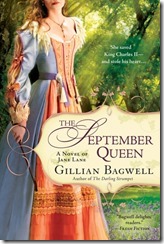
the september queen
The September Queen

venus in winter
Venus in Winter


Find Gillian Bagwell: Website | Facebook | Twitter 


Copyright © 2012 by The Maiden’s Court

Monday, September 6, 2010

The Newmarket Races and Charles II

One of Charles II’s favorite places to go on progress was to Newmarket for the horse races held there. Races had been being held at Newmarket since 1622 and the popularity of this place increased with the interest of the Royal Court. 1660 was the first time, as King, that Charles visited the race course and would return twice a year for every year after. Charles had Palace House built at the race course in the 1670’s and this is where the court would go. Charles really brought a new passion to these races and was considered by many of the women left at home to be a place of debauchery (as the royal mistresses often accompanied). Charles not only liked to watch the spectacle, but he would participate too – and won his fair share. Another credit to Charles was the creation of the second race course at Newmarket that is still in use today, the Rowley Mile. Charles also, through an Act of Parliament, required that the Town Plate race occur every year. This was the first race run under official rules and occurred in 1666. Charles himself won in 1671. Incidentally, this is the world’s oldest surviving horse race.

In Susan Holloway Scott’s novel, The Countess and the King, Catherine Sedley travels to Newmarket with James and this is the first time that she is really recognized as being his mistress, although they were attempting to be discreet.

Other events today for HFBRT:

Lucy's Review of The Countess and the King
Guest Post by Susan Holloway Scott at Historical-Fiction.com


For more information on the Newmarket Races, check out:

http://www.newmarketracecourses.co.uk/about/11764807655912.html


Copyright © 2010 by The Maiden’s Court

Sunday, September 5, 2010

Guest Post by Susan Holloway Scott

Hello and happy Sunday everyone! I have a treat here for you this morning - a wonderful guest post written by the author of The Countess and the King, Susan Holloway Scott. Throughout my reading of her newest book I took an interest in one of the men who was constantly a needle in the side of our heroine - the Earl of Dorset. Susan has written a wonderful post about the Earl of Dorset, so please, read on!


The Fine Art of Poetical Slander: Charles Sackville, 6th Earl of Dorset

Guest Post by Susan Holloway Scott, author of
The Countess and the King

Heather has requested a guest post on one of Katherine Sedley’s least-favorite people, Charles Sackville, 6th Earl of Dorset and 1st Earl of Middlesex, Lord Buckhurst (1638-1706). I don’t know if Lord Dorset exactly qualifies as a villain, but he certainly made Katherine’s life miserable. His weapon of choice was one rarely used today – poetry – but in his deft hands, it inflicted as much suffering as a good many more lethal weapons.

When Katherine first met Lord Buckhurst (his title at the time), she must have been quite young. Buckhurst was one of the closest friends of her father, Sir Charles Sedley (1639-1701), and since Katherine was Sir Charles’s first-born, it’s possible Lord Buckhurst even sent the occasional handsome birthday remembrance. Buckhurst could afford it: not only was he heir to his father’s earldom, but also to his grandfather’s as well. Both titles came with substantial wealth, making Buckhurst quite the young lord of substance, if not a handsome one: even young, he was described as “fleshy”, and that’s the face that’s shown in his portraits. Intelligent and genial, he was educated privately by tutors and made his tour of the Continent, returning just in time for the coronation of Charles II, and the beginning of the rollicking good times of the Restoration.

And for an indulged young lord barely out of his teens, with handsome prospects and plenty of money in his pockets and next to no responsibilities to go with it, London in the 1660s was a fine place indeed to be. Sir Charles and John Wilmot, Earl of Rochester (1647-1680) were his favorite boon companions, along with several others who together became known as the Merrie Gang – a name that was not used as a complement by respectable folk.

Buckhurst and his friends soon became infamous for their drinking and debauchery, and even worse. In 1662, Buckhurst and several others were charged with the robbery and murder of a hapless tanner who happened to interfere with their shenanigans. They claimed self-defense, and because Buckhurst was a lord and the tanner wasn’t, they were acquitted. Another night, the very drunk Buckhurst and Sedley commandeered the balcony of a tavern, stripped off their clothes, and delivered a blasphemous sermon in the buff to the crowd below. For that they were tried for gross public indecency, but, as Rochester complained, Buckhurst “might do anything, yet was never to blame,” and Buckhurst went free, while the others received fines and brief imprisonment.
Mistresses were of course de rigueur for this crowd and the playhouse was the place to find them. In 1667, Buckhurst claimed Nell Gwyn, and together they spent the summer in a hired house in Epsom. Among the ever-changing guests were Sir Charles and nine-year-old Katherine. When the summer was done, Buckhurst parted with Nell, not only seemingly short-changing her on the “gift” he’d promised her, but also then ungallantly trashing her among his friends.

Perhaps Katherine, young as she was, remembered that. Nine years later in 1677, when she had grown and become a member of the court in her own right, Buckhurst – who was now Lord Dorset, having inherited the earldoms of Dorset and Middlesex – approached her with much the same offer. A clever man himself, he was attracted to Katherine’s already infamous wit. He asked her to become his mistress, adding the unappealing comment that since Katherine was no beauty, this might be the best offer she would get.

As can be imagined, she refused. As cannot be imagined – at least not to the fullest extent! – she probably really let him have it, as only she could. Because from that moment onward, Dorset despised her, and took every chance he had to slander her.

While it’s likely he flung choice insults in her hearing in public, the ones that remain to us were written as satiric poems. In addition to drunken debauchery, most Restoration courtiers prided themselves on having at least a passing knowledge of classical literature and were interested in current poets and playwrights as well; it was part of what separated Gentlemen from everyone else. Dorset not only knew the great John Milton, but he was also a patron of John Dryden as well Samuel Butler and William Wycherley. Like many gentlemen, Dorset tried his own hand at poetry, and one of his poems, To all you ladies now at land, written while he briefly served as a gentleman volunteer in the Dutch Wars, is still included in English lit anthologies.

But the poems he is most famous (or infamous) for are the ones directed at Katherine. Beginning with the first soon after her rejection of him in 1677, they continued to appear sporadically for years afterward, through her time as James II mistress, and even later, after her marriage to Sir David Colyear in 1703.

Although they were addressed to “Dorinda”, everyone at court knew Dorset meant Katherine. Copies were passed around for everyone to snigger over, as well as being memorized for dramatic readings for friends: not quite as speedy as Twitter, but whenever Dorset launched a new poem, its circulation was fast enough. They found their mark, too. For though Katherine bravely blustered back in public, she was privately deeply hurt by the poems, and she never could find a way to answer them effectively. Dorset was too powerful and respected, and there were plenty of others who disliked her, and were glad to see her slandered.

Besides, though cruel, the poems are clever, and must have been even more so when they were new. I’ve included most of them in The Countess and the King, and they’re easy enough to find online. Here’s a sample:

Dorinda’s sparkling wit and eyes,
United, cast too fierce a light,
Which blazes high but quickly dies,
Warms not the heart but hurts the sight.

Why did Dorset continue his poetical vendetta for nearly three decades? They weren’t the work of a thwarted, lonely ex-suitor: Dorset was married three times to ladies (beauties all) whom he professed to love dearly, and was the father of several children. He was generally a well-liked man known for his geniality and generosity – except for Katherine. His reasons for continuing to attack her are unknown today. Perhaps he found it only an amusing literary conceit. More likely, there must have been something about Katherine that made her scorn continue to eat at him, year after year. The old saying is that revenge is a dish best served cold, and after twenty-five years, Lord Dorset’s revenge must have been as cold, and as heartless, as ice. But for the rest of the story of Katherine Sedley, I hope you’ll look for The Countess and the King.

Many thanks to Heather for having me here as her guest today!

Here’s a link (http://www.susanhollowayscott.com/books/countesspreview.htm) to an excerpt from The Countess and the King on my website (http://www.susanhollowayscott.com/).
I hope you’ll also stop by my blog with fellow author Loretta Chase, where we discuss history, writing, and yes, even the occasional pair of great shoes: http://twonerdyhistorygirls.blogspot.com/.

Thank you SO much Susan for that wonderful post! Certainly today we wouldn't go around getting back at someone with poetry, but it appears to have been very effective back then!
Other events occurring during HFBRT today are:

Susie's review of Countess and the King at All Things Royal


Copyright © 2010 by The Maiden’s Court

Thursday, September 2, 2010

Book Review: The Countess and the King by Susan Holloway Scott


The Countess and the King by Susan Holloway Scott
Paperback, 400 pages
NAL Trade
September 7, 2010
★★★★★
goodreads button

Genre: Historical Fiction

Source: Received from publisher for review for HFBRT September event

“Katherine Sedley is born to wealth and privilege in seventeenth-century London, and her unconventional upbringing includes a mad mother who believes that she’s the queen and a father who is one of the most notorious libertines in Restoration England. She quickly becomes a favorite at the palace for her sly wit and daring, and soon attracts the attention of the married Duke of York, His Majesty’s brother. She snubs respectable marriage to become the duke’s mistress, but when her lover becomes King James II, she is suddenly cast into a tangle of political intrigue in which a wrong step can mean treason, exile, or death on the executioner’s block. As the risks rise, Katherine is forced to make the most perilous of choices: to remain loyal to the king -- or to England”

Unlike all of Scott’s recent releases about the mistresses of Charles II, this book is about the mistress of Charles’ brother, James II. While still remaining in a world that is entirely familiar and comfortable to me, I was able to explore another side to the world that I loved. Charles is still a frequent visitor to the story without being the center of attention. There was one scene in the novel where all of the mistresses of Charles II, as well as the Katherine Sedley and I think James II, were all in one room together and it was like being in a room full of friends.

As always, Scott really impresses here, the writing is phenomenal and exceptionally bawdy. I love Katherine’s spunk, fire, and personality. She was allowed to grow up in a sort of no rules atmosphere within the edges of the court – which really makes for great story telling. As much as I have enjoyed Charles’ story in the past, I really enjoyed learning about James. He sort of had an “other brother” syndrome and was always trying to prove himself. His relationship with Katherine was so exciting and one of my favorites. But I want to emphasize that this was while he was Duke of York, once he became King of England I really couldn’t stand him anymore. As he embraced Catholicism and became less favored by the people, his relationship with Katherine changed and I just didn’t feel it so much anymore.

My favorite quote from this book, which wasn’t actually from the story, but from the author’s note, really sums up this story well. As you may already know, King James II is eventually ousted in favor of his daughter Mary and her husband William, and this was made possible in part by Katherine’s father (who said the following) – “as the king has made my daughter a countess, the least I could do, in common gratitude, is to make his daughter a queen” (pg 383).

Susan Holloway Scott hits this one out of the park yet again!

If you are interested in reading a snippet of this story before you have the chance to pick it up and read the whole thing (because you will absolutely want to!) you can read an excerpt at her website.

Reviews of this book by other bloggers:

Buy the Book: Amazon | Barnes & Noble | RJ Julia


Also by Susan Holloway Scott:

duchess
Duchess

royal harlot
Royal Harlot
[My Review]

the french mistress
T
he French Mistress

the kings favorit
The King’s Favorite


Find Susan Holloway Scott: Website (as Isabella Bradford) |Facebook | Twitter


Also today, as part of the HFBRT event:

Author guest post at All Thing's Royal


Copyright © 2010 by The Maiden’s Court

Friday, September 18, 2009

Book Review: Dark Angels by Karleen Koen


Dark Angels by Karleen Koen
Book 1 in Tamworth Saga series
Paperback, 544 pages
Broadway
May 29, 2007
★★★★★
goodreads button

Genre: Historical Fiction/Romance

Source: Personal Collection

Alice Verney is a young woman intent on achieving her dreams. Having left Restoration England in the midst of a messy scandal, she has been living in Louis XIV’s Baroque, mannered France for two years. Now she is returning home to England and anxious to re-establish herself quickly. First, she will regain her former position as a maid of honor to Charles II’s queen. Then she will marry the most celebrated duke of the Restoration, putting herself in a position to attain power she’s only dreamed of. As a duchess, Alice will be able to make or break her friends and enemies at will.

But all is not as it seems in the rowdy, merry court of Charles II. Since the Restoration, old political alliances have frayed, and there are whispers that the king is moving to divorce his barren queen, who some wouldn’t mind seeing dead. But Alice, loyal only to a select few, is devoted to the queen, and so sets out to discover who might be making sinister plans, and if her own father is one of them. When a member of the royal family dies unexpectedly, and poison is suspected, the stakes are raised. Alice steps up her efforts to find out who is and isn’t true to the queen, learns of shocking betrayals throughout court, and meets a man that she may be falling in love with—and who will spoil all of her plans. With the suspected arrival of a known poison-maker, the atmosphere in the court electrifies, and suddenly the safety of the king himself seems uncertain. Secret plots are at play, and war is on the horizon—but will it be with the Dutch or the French? And has King Charles himself betrayed his country for greed?

Dark Angels is a prequel to Through a Glass Darkly, and accordingly I read this first (but that was an accident. At the time I didn’t know there were other books by her). Set in the court of the licentious Charles II an amazing romance springs forth (what could be a better place to set a historical romance?). Alice Verney is the female protagonist – and an amazing heroine as well! She is a courtier to Queen Catherine of Braganza and plays the role of courtier well – sneaky, smart, well-connected. Her greatest goal in life is to marry the Duke of Balmoral – a very old man – she’s in it for the title and money of course. Yet somehow her attentions are turned by Richard Saylor, who is after Renee (Louise de Keroualle). Who will she choose and how will her ambitions play out?

Koen creates an amazing world and cast of characters who inhabit this world. She easily mixes real historical characters (Charles II, Queen Catherine, Duke of Balmoral etc) with characters of her imagination (Alice, Richard, etc) and even mixes a little of the real with imagination (Renee). I absolutely loved the character of Alice and she kept the story moving with many twists and turns – you are never really sure what she will do next!

I read this book quite a while ago – it was one of my early historical fiction reads. I must confess – I didn’t realize that the king in this book was Charles II while I was reading it. I am pretty sure I didn’t even know about Charles at that point – I think I would have enjoyed it even more had I read it recently (after reading The Merry Monarch’s Wife by Jean Plaidy).

Koen creates a vivid world and great characters that you can care about. I would highly recommend this book to anyone who enjoys the antics of the court of Charles II or enjoys a great historical romance. I now have acquired her sequel (written before Dark Angels) Through a Glass Darkly and its sequel, Now Face to Face and am very excited to read both of them.
 
If you would like to preview the story before reading it, why not try out this excerpt of the book or view the book trailer?
 

Reviews of this book by other bloggers:


Where to Buy: Amazon | Barnes & Noble | RJ Julia
 
Also by Karleen Koen:
 
through a glass darkly
Through a Glass Darkly (Book 2)
 
now face to face
Now Face to Face (Book 3)
 
before versailles
Before Versailles (Book 4)
 

Find Karleen Koen: Website | Facebook | Twitter


Copyright © 2009 by The Maiden’s Court

Saturday, August 22, 2009

Book Review: The Merry Monarch’s Wife by Jean Plaidy

The Merry Monarch's Wife by Jean Plaidy
AKA: The Pleasures of Love
Queens of England series 
Paperback, 336 pages
Three Rivers Press
January 22, 2008
★★★★½☆

goodreads button

Genre: Historical Fiction

Source: Personal Collection
“Charles II is restored to the English throne, and his court is lively and even scandalous. The country is eager for succession to be clear and certain: The next king will be the son of Charles II and his queen, Catherine of Braganza. Yet Catherine, daughter of the king of Portugal and a Catholic, has never been popular with the English people. She is also having great difficulty conceiving an heir, even as many of Charles’s well-known mistresses are bearing his children with ease. Catherine is aware that courtiers close to Charles are asking him to divorce her and take another wife—yet she is determined to hold her title in the face of all odds.”

Catherine of Braganza is a quiet, reserved, and innocent young lady when she comes to marry the Merry Monarch at the licentious court of Charles II. Her eyes are rather quickly opened when she is introduced to her new husband’s mistress, Barbara Palmer. Catherine would have to figure out how to handle her husband’s many mistresses: Barbara Palmer, Louise de Kerouaille, Nell Gwyn and many others. Catherine also has to handle the many plots that implicated her in attempts on the King’s life, hatred toward her for her Catholic religion, and failure to conceive an heir.

Plaidy does a great job at describing the many mistresses that Charles II has. We get to see not only how the court and countrymen reacted to these many women but also have an insight into what Catherine might have felt about them. She is a character that you can find much sympathy for, especially as another woman. I can imagine that it would be hard enough to handle one mistress, never mind several at once.

Prior to reading this book I had no experience with the court of Charles II. Charles is quite the interesting person. He was always lively and jovial and quick to brush off personal problems. It is amazing how carefree his life seems to be. While he cares about how his dalliances with other women affect his wife, he also expects her to handle them with decorum and not pay any attention to it (the nerve!).

Of the few Plaidy novels that I have read so far this is one of my favorites. The characters are very well developed and I could really feel for Catherine. Enough background information is given for a solid understanding of these people without having to look anything up to feel comfortable in that time period.

Plaidy is definitely becoming one of my favorite authors!

Reviews of this book by other bloggers:

Where to Buy: Amazon | Barnes & Noble | RJ Julia

Also by Jean Plaidy:

Jean Plaidy  also has written many other historical fiction books under several pen names.  The other books in this Queens of England series include:

loyal in love

Loyal in Love (AKA Myself, My Enemy)

queen of this realm

Queen of this Realm

victoria victorius

Victoria, Victorious

the lady in the tower

The Lady in the Tower

the courts of love

The Courts of Love

in the shadow of the crown

In the Shadow of the Crown

the queen's secret

The Queen's Secret

the reluctant queen

The Reluctant Queen

the queen's devotion

The Queen's Devotion (AKA William's Wife)

rose without a thorn

The Rose Without a Thorn
[My Review]


My reviews of other books by this author:


Find Jean Plaidy:
Royal Intrigue Blog


Copyright © 2009 by The Maiden’s Court

Friday, August 21, 2009

Women of Charles II - Nell Gwyn

This is the last woman who loved Charles II that we are going to explore this week. After this one, I think I have hit all of the most important ones. There will still be a book review and vocab posts this week on this subject.

Nell Gwyn was very different from the women Charles’ typically had dalliances with. She was an actress and grew up in the streets – she wasn’t at all refined like the other ladies we saw this week. Nell started off her theatre career at a young age as a vendor of oranges during the productions at the King’s Theatre. She started out acting at age 14. She was able to move up the ranks and become one of the first well known actresses at the time.

Nell met King Charles while watching a show with a date. They seem to have began their relationship shortly thereafter in April of 1668. Nell found her way as mistress relatively unblocked at the time as Barbara Palmer was basically no real competition at the time. Louise de Keroualle would eventually become her rival a few years into their relationship. Nell had 2 sons by Charles: Charles Beauclerk (in 1670) and James Beauclerk (in 1671 – he died at age 6). This would give him 8 sons – and none of these were from his wife!

Her relationship with Charles lasted until his death. He is said to have made the famous statement on his deathbed to his brother James, “And let not poor Nelly starve”. James followed his brother’s request – her debts were paid off, she was given a pension, and her mortgage was paid. Two years after Charles death Nell suffered 2 strokes, one that paralyzed one side and the other that left her bedridden. She died a few months later at the age of 37.

If you would like to read more about Nell try these books:

The King’s Favorite: A Novel of Nell Gwyn and King Charles II by Susan Holloway Scott

Nell Gwyn: Mistress to a King by Charles Beauclerk (a descendant of Charles and Nell)

Nell Gwyn by Derek Parker


Copyright © 2009-2011 by The Maiden’s Court

Thursday, August 20, 2009

Women of Charles II - Louise de Keroualle

This third woman who was one of Charles II’s many mistresses is Louise de Keroualle. This was actually one woman that I knew a little about before reading The Merry Monarch’s Wife but didn’t realize it was the same person I thought it was (I read Dark Angels by Karleen Koen but she goes by Renee not Louise).

Louise began her royal advancing in the French Court of Louis XIV. It is believed that she was placed there to become the mistress to the French King (well at least she became mistress to one king!). She was placed in the household of Henrietta, Duchess of Orleans – King Charles II’s sister. During a trip to England, visiting the court of Charles, the Duchess of Orleans suddenly died. This caused Louise to have nowhere to turn and Charles made her a lady in his wife, Catherine’s, household (first he places Barbara in her household, then Louise. I’m seeing a pattern here…).

There were many rumors that Louise had be specifically sent to England as a spy to be placed in Charles’ court. Maybe…maybe not, I don’t know. Louise became mistress to Charles around 1670. The people of England did not like Louise because she was French and Catholic, just as they really didn’t like their Queen because they were Catholic. Louise had one child with Charles II – Charles Lennox in 1672. She was given the title of Duchess of Portsmouth in 1673.

Louise was able to maintain her position as Charles’ mistress until his death. She then rather quickly fell from favor and moved back to France. She lived to be 85.

If you are interested in other reading about Louise try:

The French Mistress by Susan Holloway Scott or

Dark Angels by Karleen Koen


Copyright © 2009-2011 by The Maiden’s Court

Wednesday, August 19, 2009

Women of Charles II - Barbara Palmer - Duchess of Cleveland

Barbara Palmer, Duchess of Castlemaine, For our second woman in the life of Charles II we have Barbara Palmer, the 1st Duchess of Cleveland. This one is a mistress, probably his most well known. I find it interesting that I had heard of his many mistresses before, but not his wife!

Barbara Palmer was married to Roger Palmer, but they were mostly separated after the birth of her first child. She was a well-known courtesan in England.

She met Charles II in about 1660 while he was still abroad in the Hague. At court, Barbara held much more power than Queen Catherine of Braganza. The two were constantly butting heads. Charles appointed Barbara as Lady of the Bedchamber to his Queen, something Catherine was not too happy about (can you blame her?)

Barbara had many children during him time with Charles and he acknowledged 5 of them:
Lady Anne Palmer (Fitzroy)
Charles Palmer (Fitzroy)
Henry Fitzroy
Charlotte Fitzroy
George Fitzroy

(Another interesting note: I didn't know until recently that Fitzroy means "son of the king" and was usually a last name given to the illegitimate children of kings).

Around the mid 1670's Barbara's power over the king began to wane and he passed her aside for his new mistress, Louise de Keroualle (tomorrow's topic). She eventually died of dropsy (oedema).

If you would like to read more about Barbara Palmer try:

Royal Harlot: A Novel of the Countess Castlemaine and King Charles II by Susan Holloway Scott


Copyright © 2009 by The Maiden’s Court